 Pin it
 My roommate came home one evening with a takeout container of Korean beef bowl, and the aroma that filled our tiny apartment was impossible to ignore. She'd discovered it at a new place downtown, and watching her eat it with such satisfaction made me determined to recreate it at home. What started as a weekend experiment turned into my go-to weeknight dinner, especially on days when I wanted something that felt restaurant-quality but didn't require leaving the house. The beauty of this bowl is how it comes together in under thirty minutes, yet tastes like you've spent hours layering flavors.
I made this for my sister during her first visit to my place, and she skeptically eyed the gochujang jar until the first forkful changed her mind. She's not typically adventurous with spice, but something about the sweetness from the brown sugar and the depth of the sesame oil made it approachable rather than intimidating. Watching her request the recipe before she left felt like a quiet victory.
Ingredients
- Lean ground beef: One pound gives you enough hearty protein without excess grease pooling in your pan, though fattier beef works too if that's what you have on hand.
- Gochujang: This fermented Korean chili paste is the soul of this dish, bringing umami and heat simultaneously, and it's worth seeking out in the Asian aisle rather than substituting hot sauce.
- Soy sauce: Use regular or low-sodium depending on your preference, and if you're gluten-sensitive, tamari swaps in seamlessly.
- Brown sugar: Just a tablespoon balances the heat and saltiness, creating a sauce that coats rather than drowns the meat.
- Garlic and ginger: Mincing these fine ensures they distribute evenly and create that fragrant base that makes your kitchen smell like a restaurant kitchen.
- Toasted sesame oil: The dark kind with the deep aroma, not the light cooking oil, because this is what makes everything taste authentically Korean.
- Green onions: Split the portion so you cook half into the beef and scatter the rest fresh on top for brightness.
- Short-grain rice: The slightly sticky texture catches and holds the sauce better than long-grain varieties.
- Edamame: Buying them pre-cooked and shelled saves serious time without sacrificing nutrition.
- Cucumber and carrot: Slice and julienne these just before assembly so they stay crisp and add textural contrast.
- Kimchi: The fermented funk is non-negotiable, and chopping it distributes its flavor throughout rather than creating surprise bites of intense spice.
- Toasted sesame seeds: These add a nutty finish and visual pop, and toasting them yourself intensifies their flavor compared to store-bought versions.
Tired of Takeout? 🥡
Get 10 meals you can make faster than delivery arrives. Seriously.
One email. No spam. Unsubscribe anytime.
Instructions
- Warm your sesame oil and bloom the aromatics:
- Pour sesame oil into a large skillet over medium heat and let it warm for about thirty seconds until it smells sweet and nutty. Add your minced garlic and ginger, and you'll notice the kitchen transforms within a minute as these wake up.
- Brown the beef with intention:
- Crumble the ground beef into the pan and resist the urge to stir immediately, letting it sit for a minute so it develops a nice seared edge. Then break it up with your spatula and cook until no pink remains, which usually takes five to six minutes depending on your heat.
- Build the sauce and let it marry:
- Stir in gochujang, soy sauce, and brown sugar all at once, then let everything bubble gently for two to three minutes so the flavors meld and the sauce becomes glossy and clingy rather than watery. You'll notice it darkens slightly and starts clinging to the beef like a glaze.
- Finish with fresh green onions:
- Pull the pan off the heat and stir in half your sliced green onions, letting them wilt slightly from the residual heat but still maintain some sharpness.
- Assemble with care and intention:
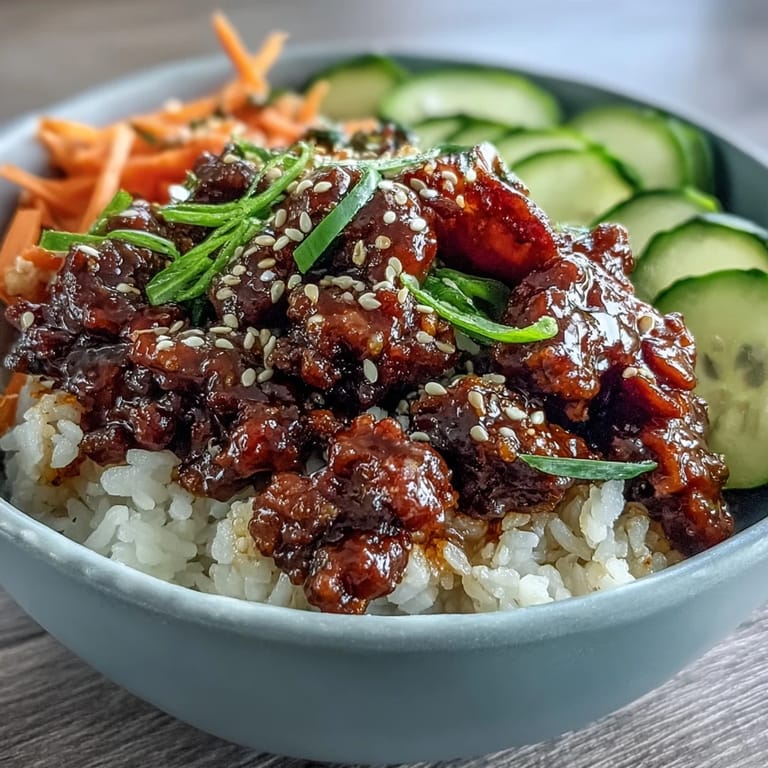
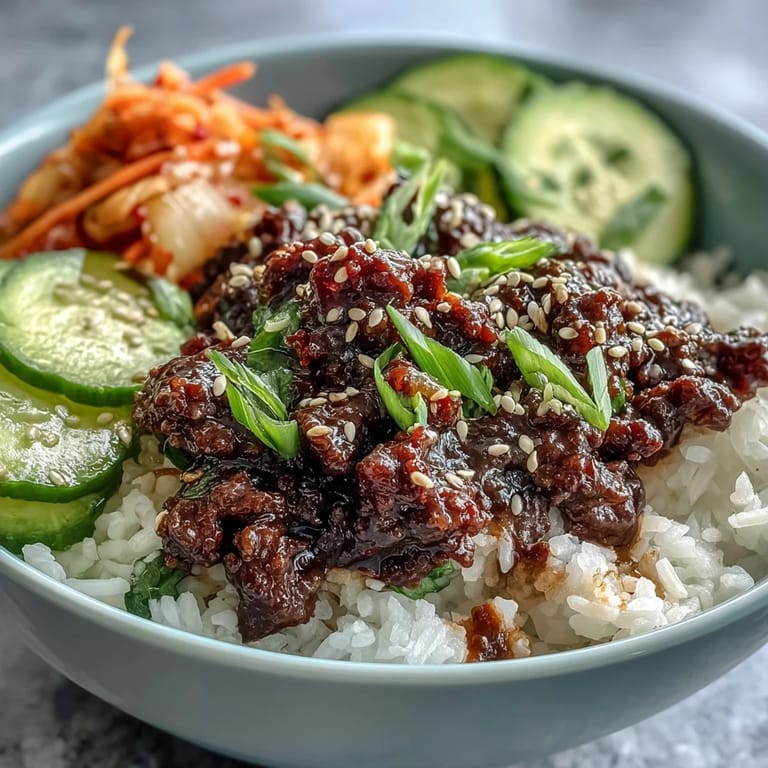
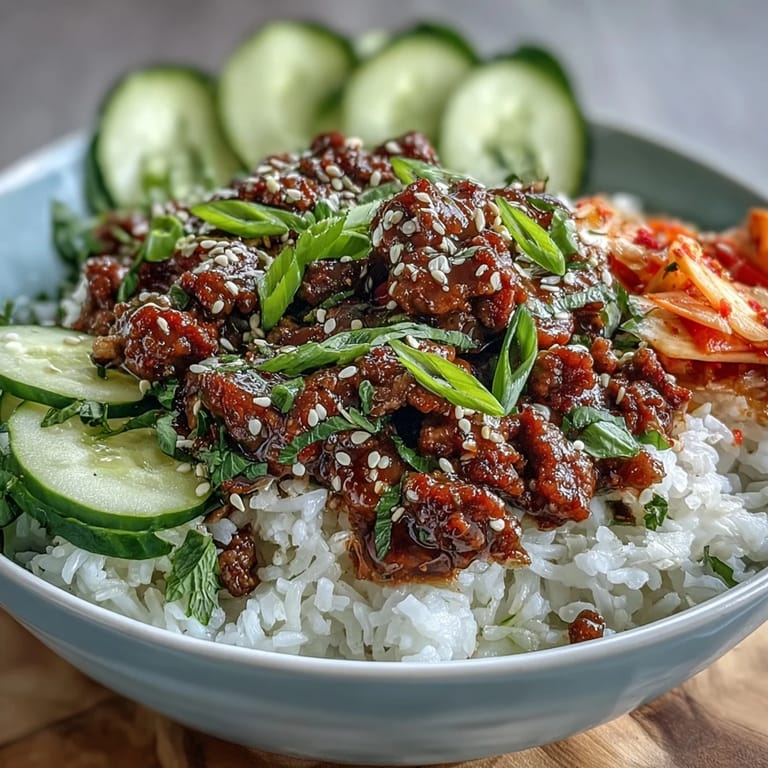
- Divide your warm rice among bowls, then crown each with a generous scoop of the beef, then arrange edamame, cucumber slices, carrot ribbons, and kimchi in sections around the bowl like you're plating something precious. This isn't just practical, it's how the flavors play together differently in each forkful.
- Garnish and serve immediately:
- Scatter the remaining green onions and toasted sesame seeds over everything, and serve right away while the rice is still warm and the vegetables still have their snap.
 Pin it
 My coworker tried this for a potluck once and brought it in a layered container so it wouldn't get soggy, and everyone around the office table stopped what they were doing when the aroma hit. That's when I realized this bowl had transcended weeknight dinner and became something that brings people together, even in a fluorescent-lit break room.
Temperature and Timing Matter
The magic of this bowl lives partially in temperature contrast, where warm beef meets cool crisp vegetables, so don't let your rice cool completely and don't let your veggies sit chopped for hours. I learned this the hard way by prepping everything in the morning and wondering why dinner felt flat by evening. Now I keep rice warm in a cooler and chop vegetables right before serving, which takes five minutes and transforms the whole experience.
Customizing Heat and Flavor
My partner finds gochujang spicy, so I started reducing it to a tablespoon and adding an extra splash of soy sauce, which kept the umami intact while toning down the heat. Some nights I'll add a teaspoon of fish sauce to deepen everything, and other times I substitute half the soy sauce with oyster sauce for a rounder sweetness. The recipe is flexible enough to bend toward your preferences without losing its identity.
Why This Works as a Meal Foundation
This bowl became my template for understanding how different components create a complete, satisfying meal rather than just a protein on rice. The fermented funk of kimchi cuts through richness, the crunch of vegetables adds life, and the beef brings substance that keeps you full for hours. Once you understand this structure, you can swap proteins or vegetables based on what's in your fridge, and it still works beautifully.
- Fried eggs on top add richness, or go with a dollop of gochujang mayo for tanginess.
- Ground turkey or chicken work seamlessly if you want something lighter, though brown it longer since it's leaner.
- Add shredded radish or cabbage if you want extra crunch and a brighter, peppery note.
 Pin it
 This bowl reminds me that sometimes the best meals are the ones you build for yourself on a regular Tuesday, not the ones you save for special occasions. It's become the dinner I make when I want to feel taken care of.
Recipe Questions & Answers
- → What does gochujang taste like?
Gochujang is a Korean chili paste with a complex flavor profile combining sweet, savory, and spicy notes. It has a fermented depth similar to miso with a gentle heat that builds slowly. The paste adds rich umami and a beautiful red color to the beef.
- → Can I make this dish ahead of time?
The seasoned beef reheats beautifully and can be made up to 3 days in advance. Store it in an airtight container in the refrigerator. When ready to serve, warm gently in a skillet and assemble with freshly cooked rice and vegetables for the best texture.
- → Is this dish very spicy?
The heat level is moderate and can be easily adjusted. Start with the suggested amount of gochujang for a gentle warmth, or reduce it for a milder version. The sugar in the sauce helps balance the spice, making it enjoyable even for those with mild spice tolerance.
- → What can I substitute for kimchi?
If kimchi isn't available, you can use quick-pickled vegetables like cucumber or radish, or simply increase the fresh vegetable portions. The fermented tang of kimchi adds authentic Korean flavor, but the bowl remains delicious without it.
- → Can I use other proteins?
Ground turkey, chicken, or plant-based crumbles work wonderfully in this dish. Cook times may vary slightly depending on the protein chosen. The gochujang sauce pairs equally well with leaner meats and vegetarian alternatives.
- → Why use short-grain rice?
Short-grain rice has a stickier texture that helps it cling to the seasoned beef and sauces, making each bite more cohesive. Its slightly sweet flavor complements the Korean seasonings. Brown short-grain rice adds nuttiness and extra fiber if preferred.