 Pin it
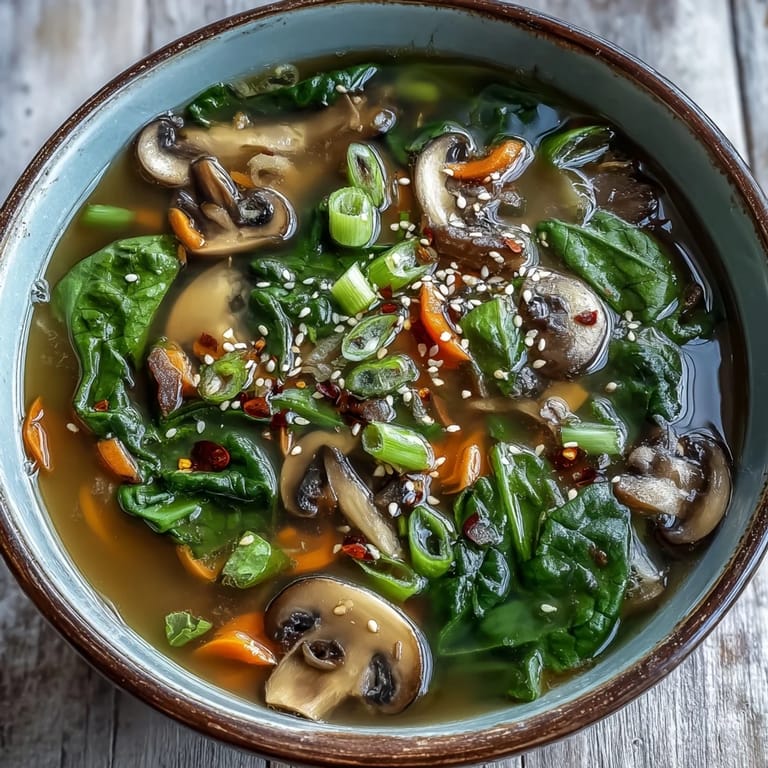
 A light, restorative soup featuring warming ginger, nutrient-rich vegetables, and probiotic-rich miso for a nourishing winter meal. This Japanese-inspired dish is perfect for those seeking comfort and health in a single bowl, taking only 30 minutes from start to finish.
 Pin it
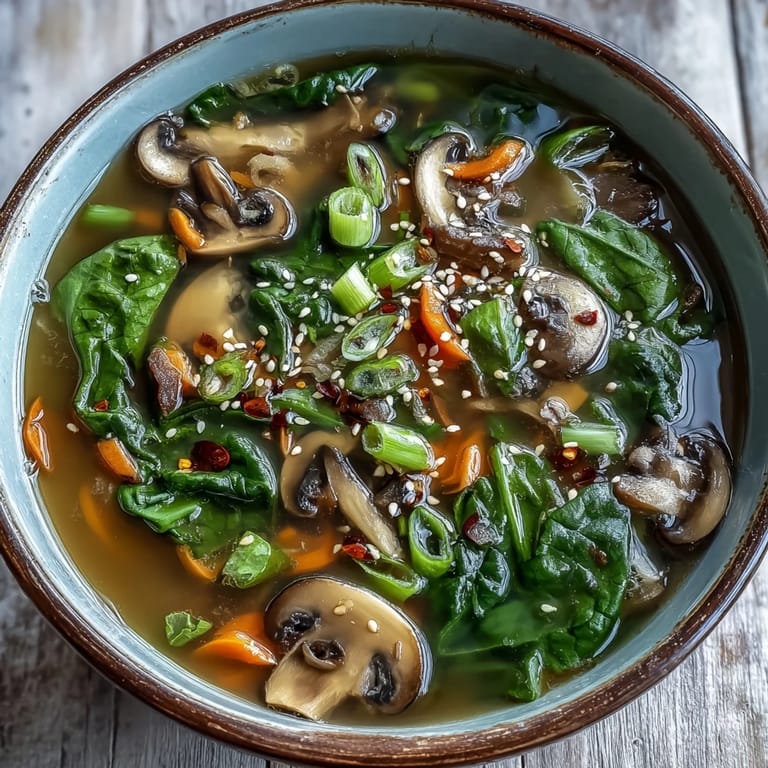
 The secret to this soup is the gentle infusion of aromatics. By simmering fresh ginger and garlic in the vegetable broth, you create a fragrant base that elevates the earthy shiitake mushrooms and crisp julienned carrots. It is a simple yet effective way to bring restorative energy to your table.
Ingredients
Tired of Takeout? 🥡
Get 10 meals you can make faster than delivery arrives. Seriously.
One email. No spam. Unsubscribe anytime.
- Broth
- 6 cups (1.5 L) low-sodium vegetable broth
- 2-inch (5 cm) piece fresh ginger, peeled and thinly sliced
- 2 cloves garlic, thinly sliced
- 2 tablespoons white or yellow miso paste
- Vegetables
- 1 cup (100 g) shiitake mushrooms, thinly sliced
- 1 cup (60 g) baby spinach or bok choy, roughly chopped
- 1 medium carrot, julienned or thinly sliced
- 2 green onions, sliced
- Garnish
- 1 tablespoon toasted sesame seeds
- 1 tablespoon chopped fresh cilantro (optional)
- 1 teaspoon chili oil or a pinch of red pepper flakes (optional)
Instructions
- Step 1
- In a large saucepan, bring the vegetable broth to a gentle simmer over medium heat.
- Step 2
- Add the sliced ginger and garlic. Simmer for 10 minutes to infuse the broth.
- Step 3
- Add the mushrooms and carrot. Cook for 5 minutes until just tender.
- Step 4
- Remove a ladleful of hot broth and whisk with the miso paste in a small bowl until smooth.
- Step 5
- Reduce the soup heat to low. Stir the miso mixture back into the pot (do not boil after adding miso to preserve probiotics).
- Step 6
- Add the spinach or bok choy and green onions. Stir until wilted, about 1 minute.
- Step 7
- Taste and adjust seasoning with more miso or a splash of soy sauce if desired.
- Step 8
- Ladle into bowls and top with sesame seeds, cilantro, and chili oil or flakes if using.
Zusatztipps für die Zubereitung
Using a small whisk to combine the miso with a ladle of warm broth ensures a smooth consistency without lumps. Remember to use a large saucepan to give the vegetables plenty of room to cook evenly.
Varianten und Anpassungen
For extra protein, add cubed silken tofu to the simmering broth. If you prefer a more robust, earthy flavor, substitute the white miso with red miso. You can also turn this into a heartier meal by adding soba or udon noodles, or swap the spinach for kale for a different texture.
Serviervorschläge
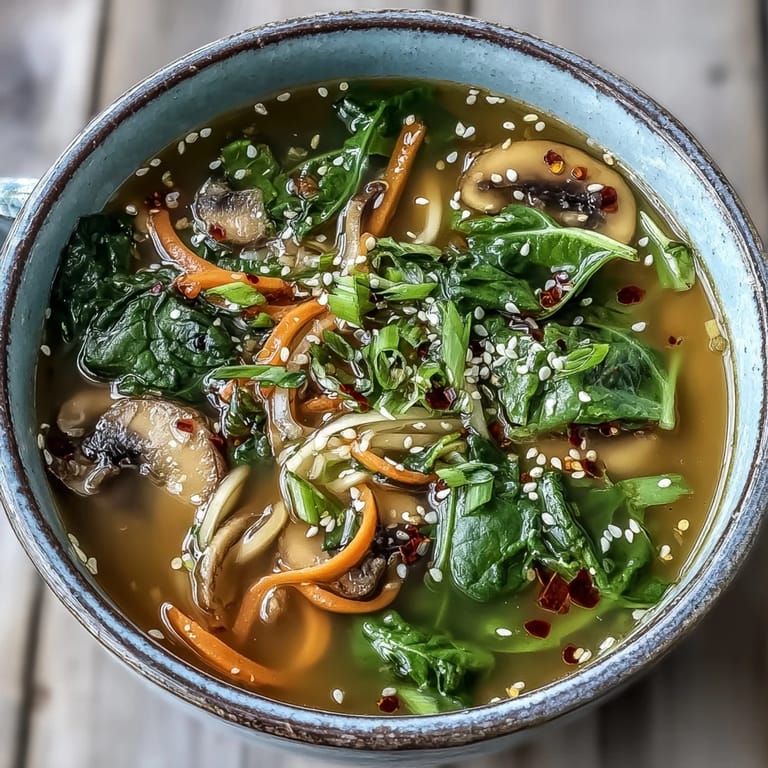
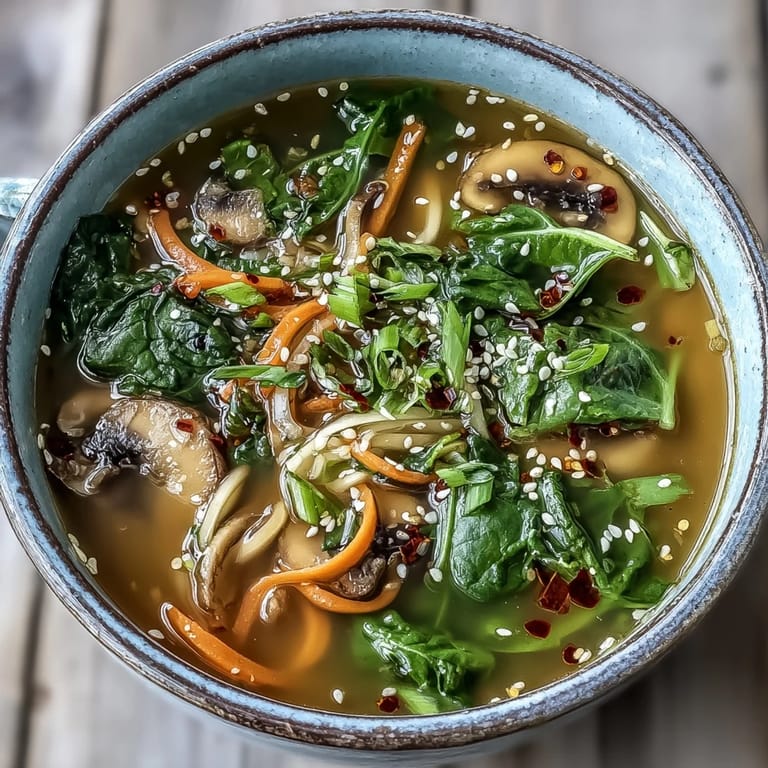
Serve this soup piping hot in rustic bowls. The addition of toasted sesame seeds and fresh cilantro adds a beautiful contrast of texture and color, while a drop of chili oil provides a subtle, welcome heat for winter evenings.
 Pin it
  Pin it
 This Miso Ginger Winter Soup is more than just a meal; it is a restorative experience. With only 90 calories per serving, it provides a light yet deeply satisfying option for anyone looking to stay nourished and warm during the cold season.
Recipe Questions & Answers
- → Can I use different types of miso paste?
Yes, you can use white, yellow, or red miso paste. White miso offers a milder, slightly sweet flavor, while red miso provides a deeper, more robust taste. Adjust the amount based on your preference for saltiness and intensity.
- → How do I prevent destroying the probiotics in miso?
The key is to never boil the soup after adding miso paste. Reduce the heat to low, whisk the miso with a small amount of warm broth separately, then gently stir it into the soup. High heat destroys beneficial probiotics.
- → What vegetables can I substitute?
You can easily swap spinach for bok choy, kale, or Swiss chard. Other great additions include snap peas, cabbage, or radishes. Choose vegetables that cook quickly to maintain their texture and nutrients.
- → Can I make this soup ahead of time?
Yes, but store the miso mixture separately. Prepare the broth with vegetables and refrigerate. When ready to serve, reheat gently and add the miso paste just before serving to preserve its probiotic benefits and fresh flavor.
- → How can I make this soup more filling?
Add cubed silken or firm tofu for protein, or include cooked soba noodles, udon noodles, or rice. You can also add edamame, more mushrooms, or a soft-boiled egg for extra substance and nutrition.
- → What's the best way to prepare fresh ginger for this soup?
Peel the ginger using the edge of a spoon to minimize waste, then slice it thinly against the grain. Thin slices release more flavor into the broth during simmering. You can remove the ginger slices before serving if preferred.