 Pin it
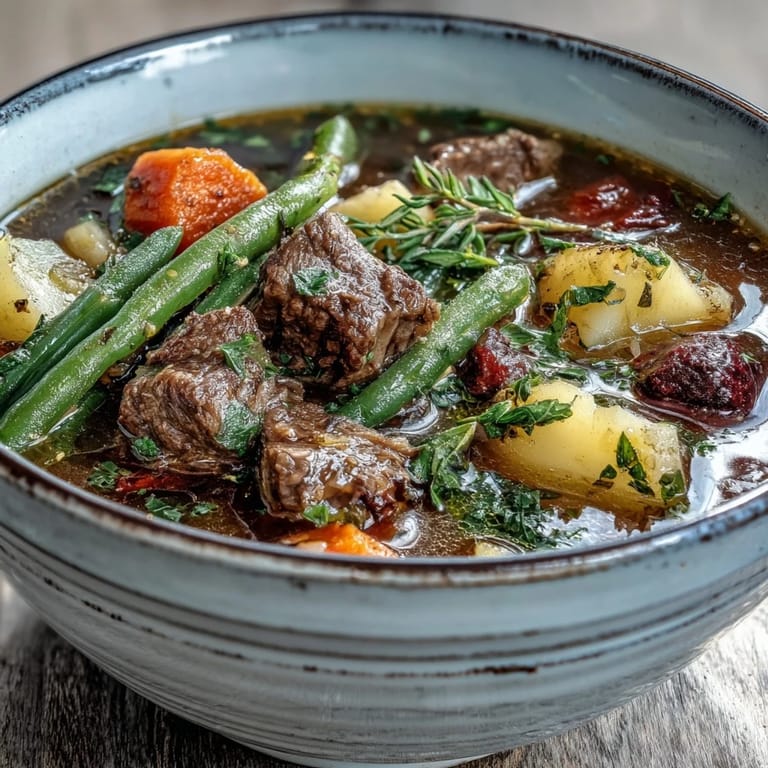
 My neighbor showed up at my door one February evening with a thermos of beef and vegetable soup, still steaming despite the cold walk across the street. She'd made it the night before, she said, and thought I looked like I could use some warmth. That single bowl changed how I thought about soup—it wasn't just something you made on autopilot, but a way to say you care. Now whenever winter settles in and the kitchen feels like the only warm place in the house, this is the first thing I reach for.
I made this soup for my parents after my dad's surgery, and watching them both go quiet between spoonfuls told me everything. My mother asked for the recipe before they left, and my father went back for thirds. Simple food that brings people together somehow feels like the most important kind of cooking there is.
Ingredients
- Beef chuck, cut into 1-inch cubes: This cut breaks down beautifully during the long simmer, becoming incredibly tender and giving the broth its deep, savory body.
- Olive oil: Just enough to get a good sear on the meat without making the soup greasy.
- Onion, diced: The aromatics form your foundation—don't skip the browning step because it builds flavor right from the start.
- Garlic, minced: Add it after the softer vegetables so it doesn't burn and turn bitter.
- Carrots and celery, sliced: These two are your classic flavor pair, and slicing them thinner means they soften evenly.
- Potatoes, peeled and diced: They thicken the broth naturally and add substance, so don't cut them too small or they'll disappear.
- Parsnip, peeled and diced (optional): I add this for earthiness, but honestly the soup is perfect without it if you can't find one.
- Green beans and frozen peas: The green beans go in early for texture, while peas wait until the end to stay bright and slightly firm.
- Diced tomatoes with juice: The acidity balances all that savory richness and keeps the soup from feeling heavy.
- Beef broth: Use a good quality one—it's worth it since it's the soul of everything here.
- Bay leaves, thyme, oregano: These three work together to create that unmistakable cozy soup flavor without overpowering anything.
- Salt and pepper: Taste as you go because everyone's broth is different, and you'll need to adjust at the end.
- Fresh parsley for garnish: It's just a sprinkle, but it catches the light and reminds you this is homemade.
Tired of Takeout? 🥡
Get 10 meals you can make faster than delivery arrives. Seriously.
One email. No spam. Unsubscribe anytime.
Instructions
- Sear the beef until it's golden brown:
- Heat your oil until it shimmers, then listen for that satisfying sizzle as the meat hits the pot. You're building flavor here, so don't crowd the pan—let each piece get its own space for about 5 to 7 minutes total.
- Build your flavor base with the aromatic vegetables:
- Once the beef is out, the same pot catches all those browned bits. Add the onion, carrots, and celery and let them soften for 5 minutes, then finish with the garlic for just 1 minute so it stays fragrant instead of scorching.
- Combine everything and bring it to life:
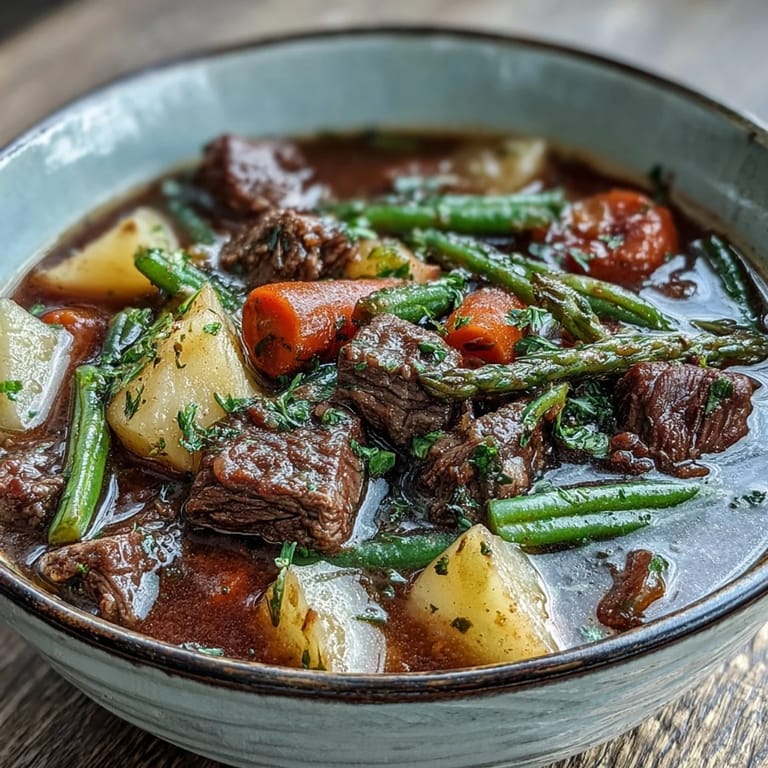
- Return the beef, then add potatoes, parsnip if you're using it, green beans, tomatoes with all their juice, broth, and your herbs and seasonings. Bring it to a boil so you know it's heating through, then turn the heat down.
- Let time do the work with a long, gentle simmer:
- Cover the pot and let it bubble quietly for 1 hour and 15 minutes, stirring now and then. The beef will soften, the broth will deepen, and your kitchen will smell incredible.
- Finish with the peas and adjust your seasoning:
- Uncover the pot and add the frozen peas, cooking for another 10 to 15 minutes until every vegetable is tender. Now taste it—this is your moment to add more salt, pepper, or even a splash of Worcestershire if it needs that extra something.
- Serve with pride:
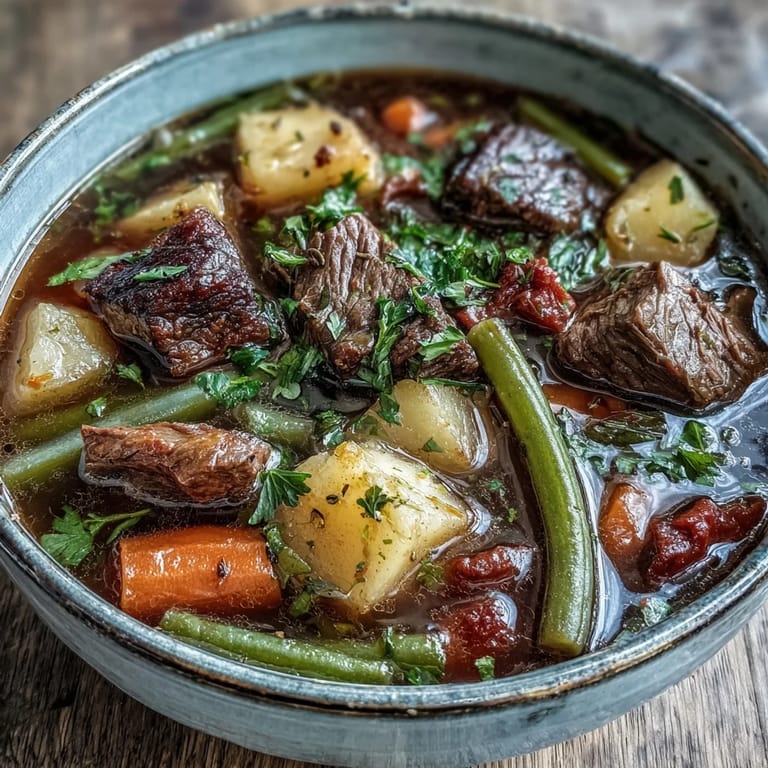
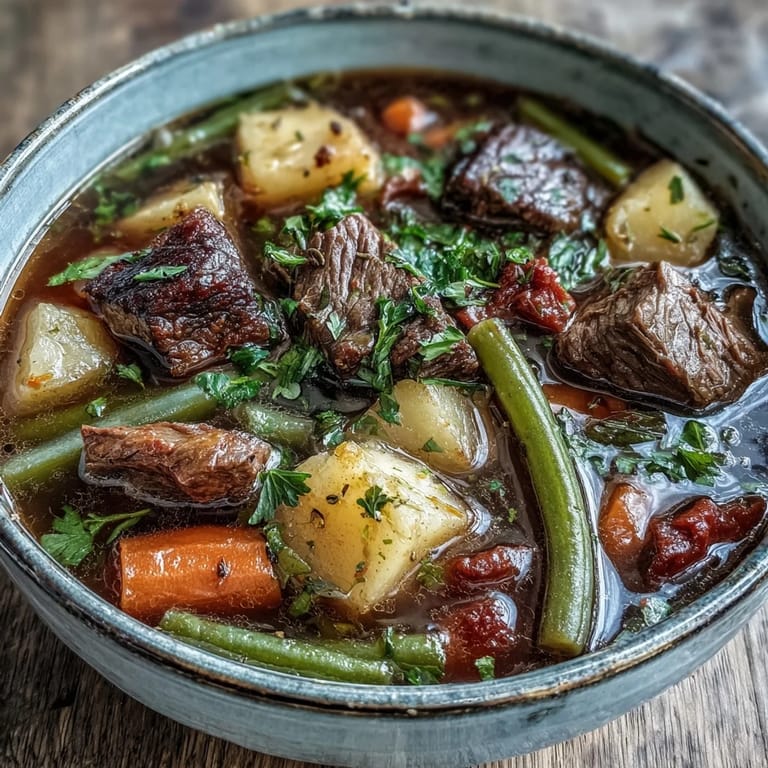
- Fish out the bay leaves, ladle the soup into bowls, and scatter fresh parsley on top like you mean it. Crusty bread on the side turns this into a meal that feels complete.
 Pin it
  Pin it
 I remember my daughter asking why this soup tasted like love, and I realized she'd caught something I'd been trying to explain for years. There's something about food made with intention, without rushing, that people can taste.
Why This Soup Works Every Time
The magic is in the balance—the beef provides richness, the vegetables add brightness and texture, and the broth ties everything into a coherent whole. The long cook time isn't a hassle; it's actually where the soup gets better, as all those flavors settle and marry together. Even if you're not the most confident cook, this recipe doesn't punish small mistakes the way some dishes do.
Playing With What You Have
One night I didn't have green beans, so I threw in some spinach at the end instead. Another time I used sweet potatoes because that's what was in my pantry, and my partner said it was his favorite version yet. The beauty of a soup like this is that it's a template, not a cage—the core idea is so solid that swapping things out only makes it feel more like yours.
Making It Ahead and Storing It Right
Honestly, this soup tastes better the next day once the flavors have had time to really know each other. I make a big batch on a Sunday and portion it into containers, which means I have comfort ready to go all week long. It keeps for up to 4 days in the refrigerator, and it freezes beautifully for up to 3 months, though I find I eat it long before then.
- Cool the soup completely before storing so condensation doesn't make everything watery.
- Leave a little headspace in containers if you're freezing it, since soup expands slightly as it freezes.
- Reheat gently on the stove over medium heat rather than blasting it in the microwave, which helps it taste like you just made it.
 Pin it
  Pin it
 This soup is a reminder that the best meals are often the simplest ones, made with patience and the confidence that good ingredients and time will do most of the work for you. Every spoonful is proof that sometimes taking the long way around is exactly what you need.
Recipe Questions & Answers
- → Can I use a different cut of beef for this soup?
Yes, you can use beef stew meat, bottom round, or brisket. Chuck is preferred because it becomes tender and flavorful during the long simmer time. Avoid lean cuts like sirloin as they may become tough.
- → How do I store and reheat leftovers?
Store in an airtight container in the refrigerator for up to 4 days or freeze for up to 3 months. Reheat on the stovetop over medium heat, stirring occasionally, or microwave in individual portions. Add a splash of broth if needed.
- → Can I make this soup in a slow cooker?
Absolutely. Brown the beef and sauté the vegetables first, then transfer everything to a slow cooker. Cook on low for 7-8 hours or high for 4-5 hours. Add peas during the last 30 minutes of cooking.
- → What vegetables can I substitute or add?
Feel free to add turnips, sweet potatoes, corn, zucchini, or cabbage. You can also use frozen mixed vegetables. Just adjust cooking times based on how firm the vegetables are—root vegetables take longer than leafy greens.
- → How can I make the soup thicker?
Mash some of the potatoes against the side of the pot, add a slurry of cornstarch and water, or stir in a tablespoon of tomato paste. You can also simmer uncovered for an additional 15-20 minutes to reduce the liquid.
- → Is this soup gluten-free?
This soup is naturally gluten-free, but always check your beef broth label as some brands contain gluten or additives. Use certified gluten-free broth if you have celiac disease or gluten sensitivity.