 Pin it
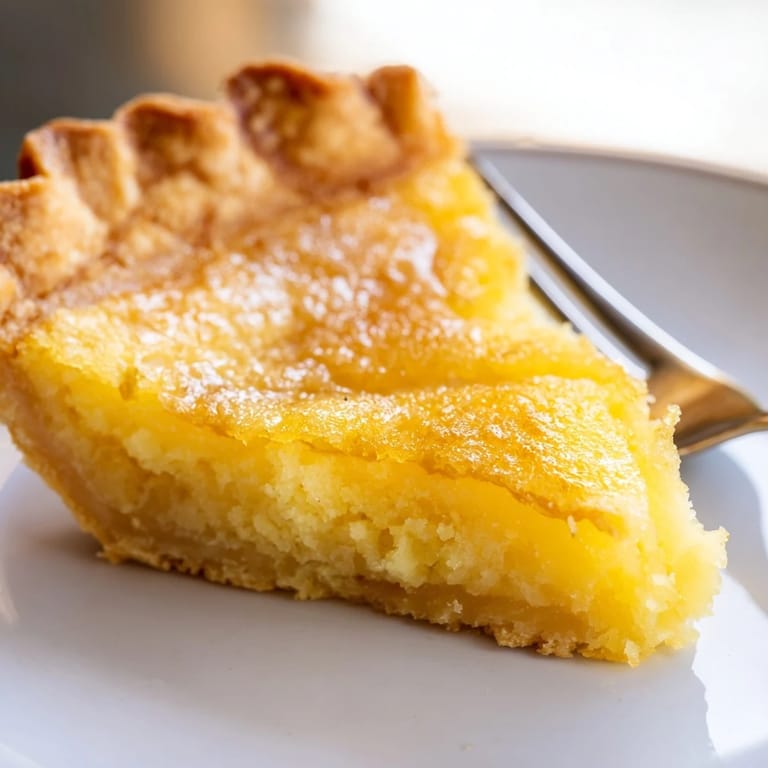
 Chess pie landed in my kitchen on a humid July afternoon when my grandmother's old recipe card fell out of a cookbook I'd borrowed. The directions were sparse, almost cryptic—just a list of ingredients and vague timing. But the moment I pulled that golden pie from the oven, with its caramelized sugary top and custardy center, I understood why she'd kept making it for fifty years. It's the kind of dessert that tastes fancier than it has any right to be, given how simple it actually is.
I made this pie for a church potluck once, nervous that nobody would eat it because the name seemed so plain. A woman I'd never met took a slice, closed her eyes for a moment, and told me it tasted like her childhood. That's when I realized chess pie isn't really about being fancy or Instagram-worthy—it's about being exactly what people need when they don't know they need it.
Ingredients
- Unbaked 9-inch pie crust: Whether you make yours from scratch or grab one from the freezer section, it's your foundation. I've had equal success with both, though homemade does add that personal touch if you have the time.
- Granulated sugar: Don't be tempted to reduce this—the sugar caramelizes on top and dissolves into the filling, creating that signature texture. It's what makes chess pie taste like chess pie.
- Unsalted butter, melted and cooled: Melting and cooling it first prevents the eggs from scrambling when you whisk them together. This small step is easy to skip but makes a real difference.
- Large eggs: These bind everything and give the pie its custard-like body. Room temperature eggs mix in more smoothly, though I've never had major issues either way.
- Cornmeal and all-purpose flour: These create a subtle grit and structure that keeps the filling from being too custardy. Together they're the secret to chess pie's unique texture.
- Salt: Just a quarter teaspoon, but it sharpens all the other flavors and keeps the sweetness from becoming cloying.
- Whole milk: It adds richness without overwhelming the delicate flavor. You could use half-and-half for extra decadence if you wanted to.
- Vanilla extract: A teaspoon gives warmth and depth without making the pie taste obviously vanilla-y. Pure extract tastes better than imitation in this case.
- White vinegar: Optional, but it adds a subtle brightness that keeps the pie from tasting one-note. I usually include it, but some people skip it entirely.
Tired of Takeout? 🥡
Get 10 meals you can make faster than delivery arrives. Seriously.
One email. No spam. Unsubscribe anytime.
Instructions
- Set your oven and crust:
- Preheat to 350°F and place your crust in the pie dish, crimping the edges however you like. I usually crimp them decoratively, but messy edges work just as well—no one judges your pie crust when it tastes this good.
- Combine the dry mixture:
- Whisk together sugar, cooled melted butter, eggs, cornmeal, flour, and salt in a large bowl until you have a smooth, unified mixture. This is where the magic starts, as all those individual ingredients become one cohesive base.
- Add the wet ingredients:
- Pour in the milk, vanilla, and vinegar if using, then whisk again until everything is silky and fully combined. You should have something that looks almost like a sweet custard batter.
- Pour and bake:
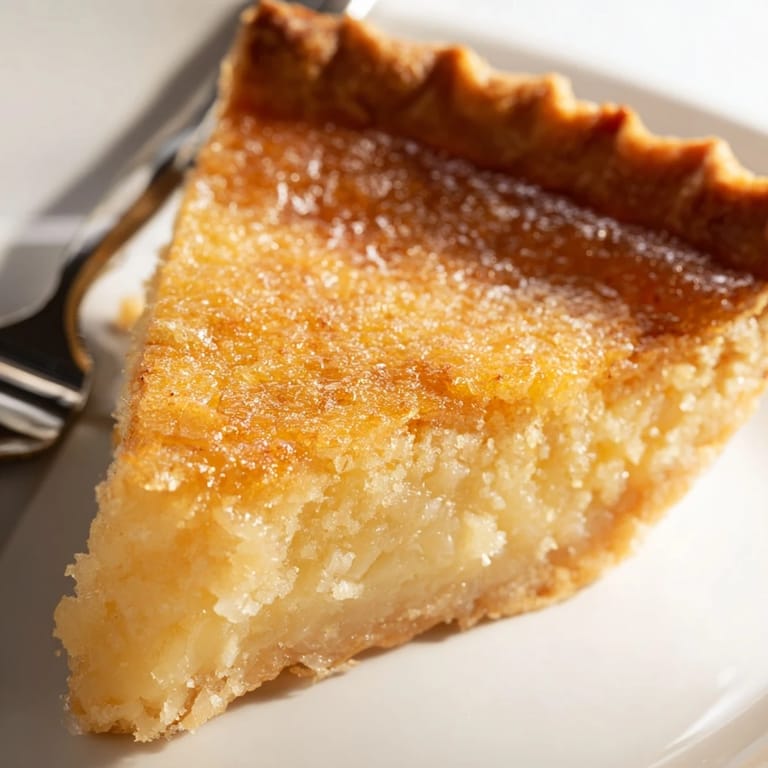
- Transfer the filling into your prepared crust and slide it into the preheated oven. Bake for 45 to 50 minutes, watching for that moment when the center is just set but the top has turned a deep golden brown and risen slightly.
- Cool with patience:
- Let the pie cool completely on a wire rack before slicing—I know it's tempting to dig in right away, but this resting time lets the custard set properly and makes slicing so much easier.
 Pin it
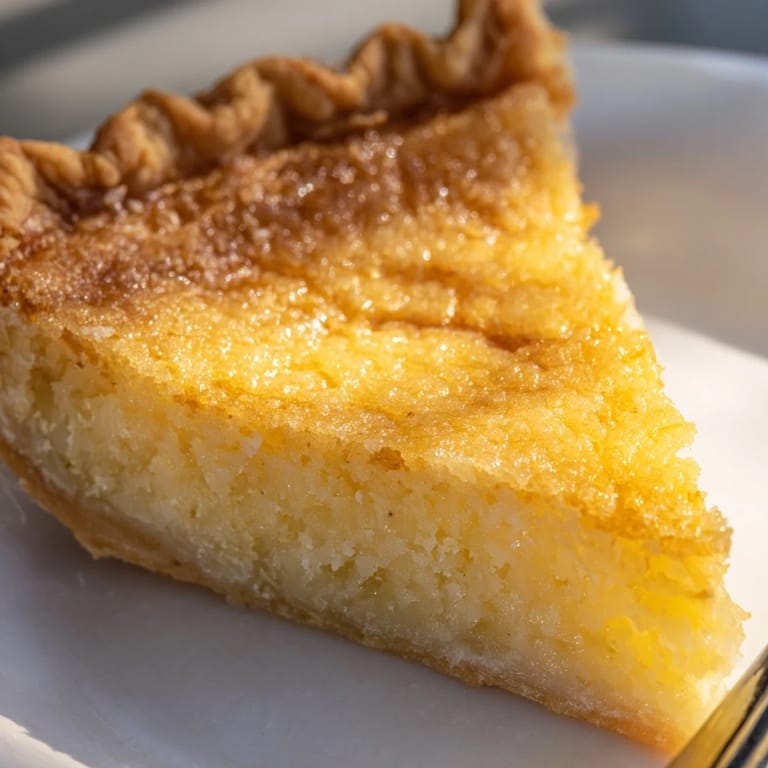
 I learned the value of chess pie during a difficult month when my neighbor brought one over with zero fanfare, just handed it through my door and left. That act of quiet generosity, paired with something so unassuming yet so deeply comforting, changed how I think about cooking for people.
The Mystery of the Name
No one seems to know for certain why it's called chess pie. Some say it's a corruption of 'cheese pie,' others think it comes from the chest where pies were stored, and a few folks insist it's just because the filling settles into a chess board pattern when it cools. The truth is lost to time, but the pie itself tastes like history—the kind of recipe that got passed down through generations because it worked, not because it had a fancy story behind it.
How to Know It's Done
The hardest part of making chess pie is knowing when to pull it from the oven. You're looking for that moment when the edges are set but the very center—about the size of a quarter—still has the tiniest jiggle when you gently shake the pie. It will continue to set as it cools, and that's exactly what you want. If you bake it until the center is completely firm, you've actually overbaked it slightly.
Serving and Variations
I've served this pie with fresh berries, whipped cream, vanilla ice cream, and nothing at all. Each way is perfect. Some people add a pinch of nutmeg to the filling for warmth, or a whisper of lemon zest for brightness. My grandmother sometimes stirred in a tiny splash of bourbon, which nobody could quite identify but everyone loved. The beauty of chess pie is that it's sturdy enough to play around with, but pure enough that it doesn't need embellishment to be memorable.
- A dollop of whipped cream cut the richness beautifully without overwhelming the delicate flavor.
- If you want to add nutmeg or lemon zest, do it when whisking the wet ingredients so it distributes evenly.
- Leftover pie keeps covered at room temperature for two days and honestly tastes even better the next morning.
 Pin it
 Chess pie is the recipe I come back to when I want to bake something meaningful without any fuss. It's been feeding people and telling stories longer than anyone can remember.
Recipe Questions & Answers
- → What ingredients create the custard filling?
The filling blends granulated sugar, melted butter, eggs, cornmeal, flour, salt, whole milk, vanilla extract, and optional vinegar for a smooth texture.
- → Should I pre-bake the pie crust?
No, the pie crust is placed unbaked into the dish and baked along with the custard filling to ensure a tender base.
- → How do I know when the pie is done baking?
Bake for 45–50 minutes until the center is just set and the top turns golden brown, then allow it to cool before slicing.
- → Can I add extra flavors to the custard?
Yes, adding nutmeg or lemon zest to the filling provides a pleasant twist without overpowering the traditional taste.
- → How long can leftovers be stored?
Store leftovers covered at room temperature for up to two days to maintain freshness and texture.
- → Is vinegar necessary in the filling?
Vinegar is optional and adds a subtle brightness; it can be omitted without affecting the custard’s consistency.