 Pin it
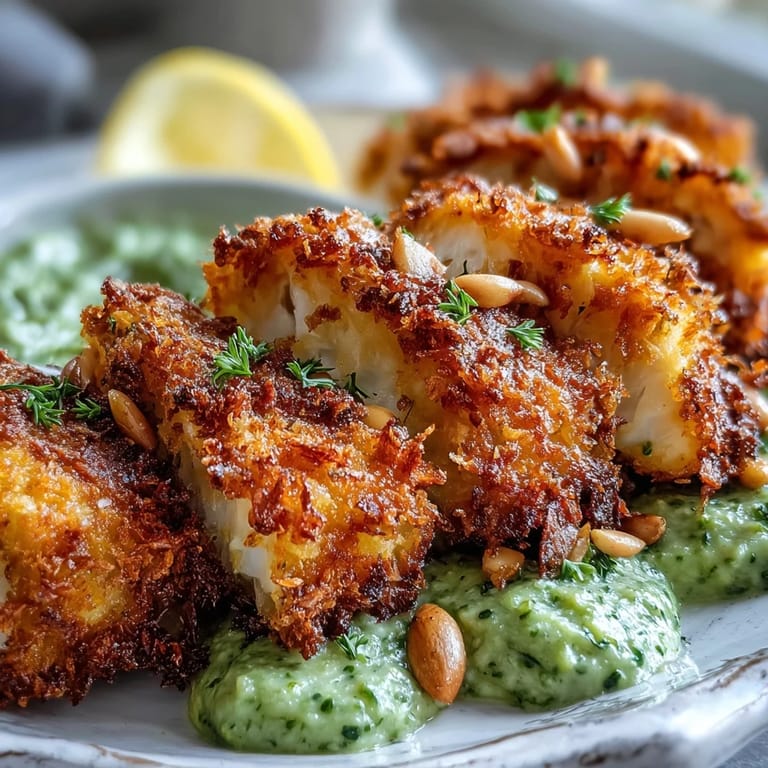
 The smell of fish frying used to make me nervous until I started baking it instead. One Saturday afternoon, I had a craving for something crispy and comforting but didn't want the kitchen smelling like a chippy for three days. I remembered a trick from a cooking show about oven-baked breaded fish, and decided to fancy it up with Parmesan in the crust. The result was so much better than I expected, golden and crunchy without a single splatter on the stovetop.
I made these for a casual dinner party once, thinking they might be too simple. My friend's kids devoured them, dipping each goujon into the pesto like it was the best thing they'd ever tasted. The adults finished off the rest with wine and lemon wedges, and someone asked if I'd trained as a chef. I laughed because it was honestly one of the easiest things I'd made all month, but it looked and tasted like I'd tried much harder.
Ingredients
- Skinless haddock fillets: Haddock is mild and flaky, perfect for goujons, but cod or pollock work just as well if that's what's fresh at your fishmonger.
- Plain flour: This is your first layer of coating, helping the egg stick and creating a base for the crunch.
- Eggs: Beaten eggs act as glue for the breadcrumb mixture, make sure they're well whisked so the coating goes on evenly.
- Panko breadcrumbs: Panko gives you that light, crispy texture that regular breadcrumbs just can't match, they stay crunchy even after baking.
- Parmesan cheese: Finely grated Parmesan mixed into the breadcrumbs adds savory richness and helps them brown beautifully in the oven.
- Black pepper, sea salt, and smoked paprika: Simple seasonings that bring out the fish and add a subtle warmth, the paprika is optional but I love the color it gives.
- Frozen peas: They blanch quickly and blend into a sweet, vibrant pesto that feels fresh and light.
- Fresh basil leaves: Basil brings herby brightness to the pesto, use the leaves only and save the stems for stock.
- Garlic clove: One small clove is enough, too much and it overpowers the delicate peas.
- Pine nuts: These add creaminess and a gentle nuttiness, but sunflower seeds work perfectly if you need a nut-free version.
- Extra-virgin olive oil: Good quality oil makes the pesto silky and ties all the flavors together.
- Lemon juice: Freshly squeezed lemon juice brightens the pesto and cuts through the richness of the Parmesan crust.
Tired of Takeout? 🥡
Get 10 meals you can make faster than delivery arrives. Seriously.
One email. No spam. Unsubscribe anytime.
Instructions
- Preheat and Prep:
- Set your oven to 200°C (180°C fan) and line a baking sheet with parchment paper. This keeps the goujons from sticking and makes cleanup so much easier.
- Set Up Your Coating Station:
- Arrange three shallow bowls in a row: one with plain flour, one with beaten eggs, and one with the panko, Parmesan, pepper, salt, and paprika mixed together. This assembly line makes coating the fish quick and tidy.
- Coat the Haddock Strips:
- Take each strip of haddock and dredge it in the flour, shaking off any excess, then dip it into the egg, and finally press it into the Parmesan-panko mixture until well covered. Lay them on the baking sheet with a little space between each one.
- Bake Until Golden:
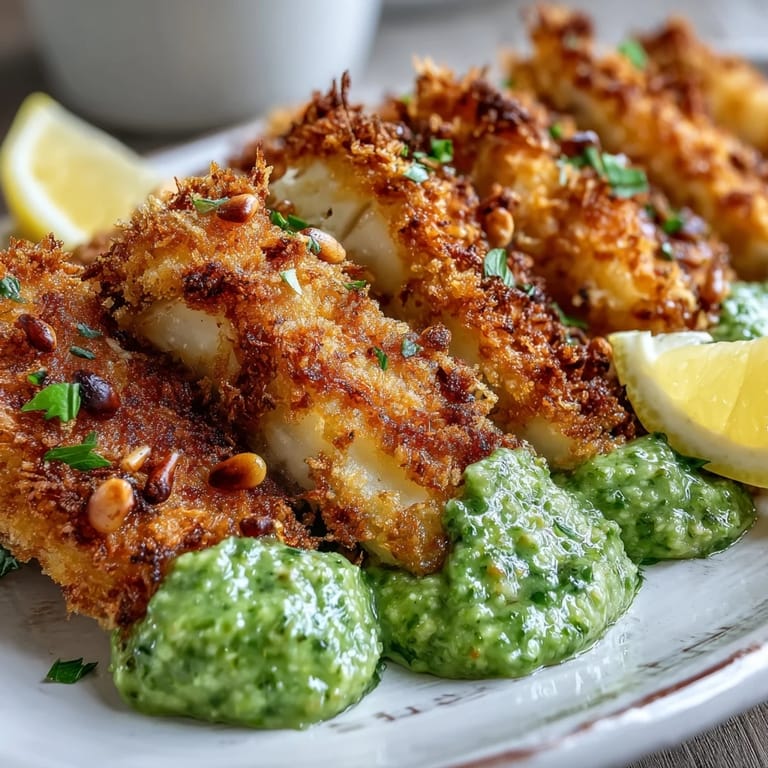
- Lightly spray or drizzle the goujons with olive oil, then bake for 15 to 20 minutes, turning them halfway through so both sides get crisp and golden. They should look beautifully bronzed and feel firm to the touch.
- Make the Pea Pesto:
- While the fish bakes, blanch the peas in boiling water for 2 minutes, then drain and run them under cold water to keep their bright green color. Toss them into a food processor with basil, Parmesan, garlic, pine nuts, olive oil, and lemon juice, then blitz until mostly smooth but still a bit textured, and season with salt and pepper.
- Serve Hot:
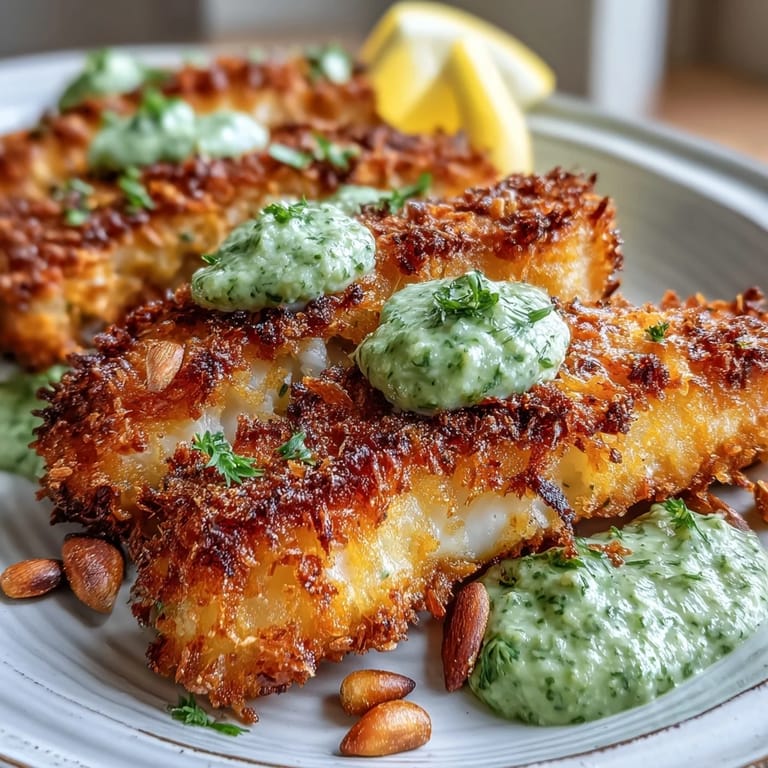
- Plate the goujons while they're still hot and crispy, with a generous spoonful of pea pesto on the side and lemon wedges for squeezing. A handful of mixed salad leaves makes it feel like a proper meal.
 Pin it
 There's something lovely about a dish that feels fancy but doesn't demand much from you. I've served these at everything from quick weeknight dinners to slightly fancier gatherings, and they always get the same reaction, surprise that something so simple can taste this good. The pea pesto especially seems to catch people off guard in the best way, like a little burst of spring on the plate.
Choosing Your Fish
Haddock is my go-to because it's firm enough to hold its shape but still tender and mild. Cod works beautifully too, and pollock is a great budget-friendly option that tastes nearly identical. Whatever you choose, make sure the fillets are fresh and skinless, and cut them into even strips so they cook at the same rate. If your fishmonger is friendly, ask them to do the cutting for you and save yourself a few minutes at home.
Getting the Crust Just Right
The secret to a perfect crust is making sure each layer sticks properly. Pat the fish dry with kitchen paper before you start, any moisture will make the flour slide off. Press the breadcrumb mixture firmly onto each strip so it clings, and don't be shy with the oil spray before baking. I learned this the hard way after my first batch came out pale and sad looking, now I give them a proper spritz and they come out gorgeously golden every time.
Storing and Reheating
Leftovers keep well in the fridge for up to two days, stored in an airtight container. Reheat them in a hot oven rather than the microwave, which will make them soggy. Ten minutes at 180°C brings back most of the crispness, and they're still delicious tucked into a sandwich or served over salad.
- Let the goujons cool completely before storing to avoid condensation softening the crust.
- The pea pesto can be made a day ahead and kept covered in the fridge, just give it a stir before serving.
- Freeze any leftover pesto in ice cube trays and pop them into pasta or spread on toast later.
 Pin it
 This recipe has become one of my favorite ways to make fish feel special without spending hours in the kitchen. It's proof that a few good ingredients and a hot oven can do more than you think.
Recipe Questions & Answers
- → Can I use a different type of fish?
Yes, cod or pollock work excellently as substitutes for haddock. Choose firm white fish fillets with similar texture and thickness for best results.
- → How do I keep the coating crispy?
Lightly spray or drizzle the coated goujons with olive oil before baking, and turn them halfway through cooking. Avoid overcrowding the baking sheet to ensure even crisping.
- → Can I make the pea pesto in advance?
Yes, the pea pesto can be prepared up to 2 days ahead and stored in an airtight container in the refrigerator. Drizzle a thin layer of olive oil on top to prevent browning.
- → Is there a nut-free alternative for the pesto?
Absolutely. Replace pine nuts with toasted sunflower seeds or pumpkin seeds for a nut-free version that maintains the pesto's texture and flavor.
- → Can I make this gluten-free?
Yes, simply substitute regular flour and breadcrumbs with certified gluten-free alternatives. The Parmesan coating will still create a beautifully crispy crust.
- → What should I serve with these goujons?
Serve with lemon wedges, mixed salad leaves, roasted vegetables, or crispy chips. The pea pesto also works wonderfully as a dip for the side accompaniments.