 Pin it
 My neighbor knocked on the door one summer afternoon with a pavlova box in her hands, still warm from her oven. That crisp meringue shell shattered under my fork, revealing the secret I'd never quite mastered: patience and clean bowls. She laughed when I admitted I'd tried making one three times before, each time ending up with a deflated, weeping mess. That day I finally understood it wasn't magic—just understanding what egg whites were trying to tell me.
I made this for my sister's garden party when she was nervous about impressing her new partner's family. The pavlova emerged from the oven with a slight crack right down the middle—disaster, I thought. Instead, it became the conversation starter: everyone wanted to know if that imperfect line was intentional, and somehow it made the whole dessert feel more human and less like something from a magazine.
Ingredients
- Egg whites (4 large): These must be at room temperature and completely separated from any yolk—even the tiniest bit of fat will betray you and refuse to whip up properly.
- Superfine sugar (1 cup): The texture matters here; regular sugar takes longer to dissolve, so invest in superfine if you want those glossy peaks that catch the light.
- Cornstarch (1 tsp): This quiet ingredient is what keeps the meringue from weeping and helps it develop that tender center beneath the crispy shell.
- White vinegar (1 tsp): It stabilizes the meringue and gives it structure, though you won't taste it—trust the science on this one.
- Vanilla extract (1 tsp for meringue, 1 tsp for cream): Use real vanilla; the flavor difference between extract and imitation shows up in something this delicate.
- Heavy cream (1 cup): Chill your bowl and beaters beforehand; cold cream whips faster and holds its peaks like it means business.
- Powdered sugar (2 tbsp): Dissolves into the cream instantly, unlike granulated sugar which can leave a grainy texture.
- Fresh strawberries (2 cups): Pick ones that smell sweet and fragrant—that's your signal they'll taste the way strawberries should.
Tired of Takeout? 🥡
Get 10 meals you can make faster than delivery arrives. Seriously.
One email. No spam. Unsubscribe anytime.
Instructions
- Set your stage:
- Preheat to 275°F and line your baking sheet with parchment, drawing that 9-inch circle as your roadmap. This low, slow heat is what transforms egg white foam into something magical rather than cooking it into tough rubber.
- Whip the whites to soft peaks:
- Start on medium speed until you see the mixture turn white and foamy—this takes a few minutes. Watch for that moment when lifting the beater leaves peaks that flop right back over; you're almost there but not quite.
- Rain in the sugar gradually:
- Here's where patience pays off: add one tablespoon at a time while beating on high. This slow process dissolves the sugar completely, giving you glossy, stiff peaks instead of gritty, broken ones after 7 to 10 minutes of beating.
- Fold in the secret ingredients:
- Gently fold in the cornstarch, vinegar, and vanilla using a spatula, being careful not to deflate all that air you just captured. This is where your hand becomes more important than the mixer—gentle, slow strokes that honor the structure you've built.
- Shape your nest:
- Spoon the meringue onto the parchment using your circle as a guide, then create a shallow well in the center with the back of a spoon. This nest shape keeps the toppings centered and looks deliberate rather than accidental.
- The slow bake and cool:
- Bake for 1 hour 15 minutes until it's pale cream colored and feels crisp to the touch, then turn off the oven and crack the door slightly open. Let it sit in that cooling oven for at least an hour; this gradual temperature change prevents cracking and helps develop that tender interior.
- Whip the cream while waiting:
- Chill your bowl and beaters, then whip the cold cream with powdered sugar and vanilla until soft peaks form. Stop before it becomes butter—soft peaks mean it will spread smoothly without looking overworked.
- Macerate the berries:
- Toss the sliced strawberries with granulated sugar if desired and let them sit for 10 minutes, which draws out their juice and concentrates their flavor. This step transforms ordinary berries into something more syrupy and intense.
- Assemble with care:
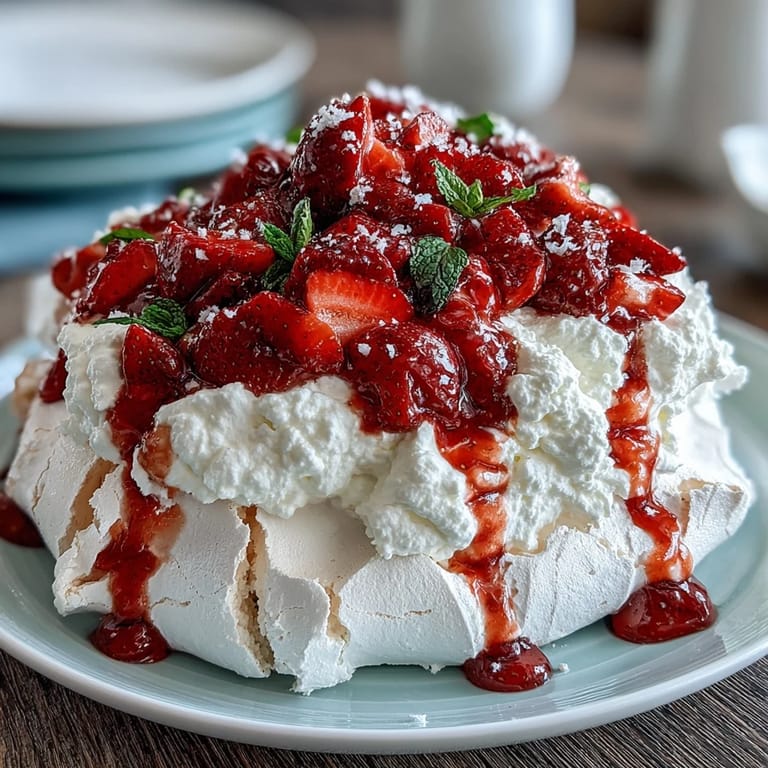
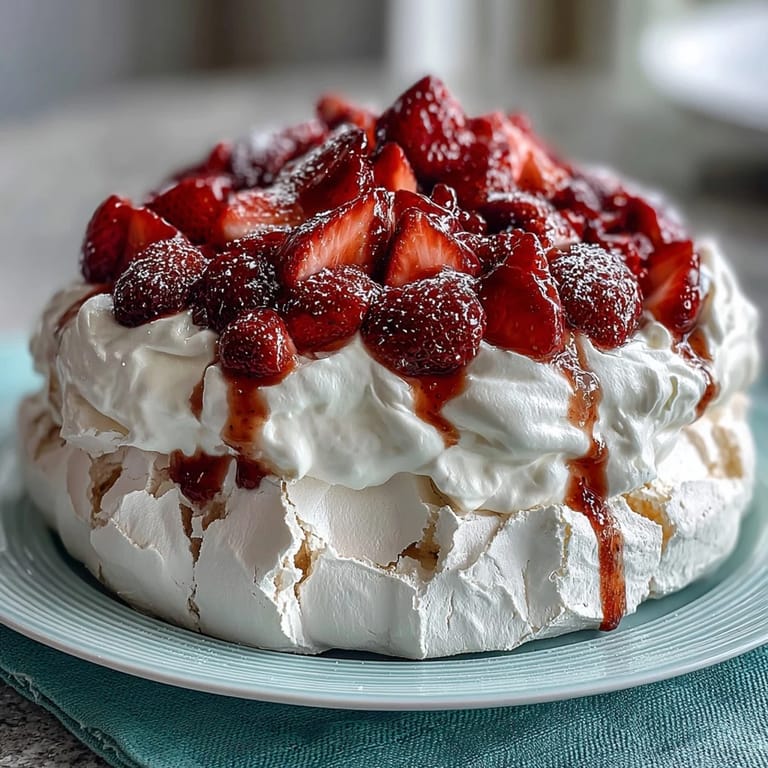
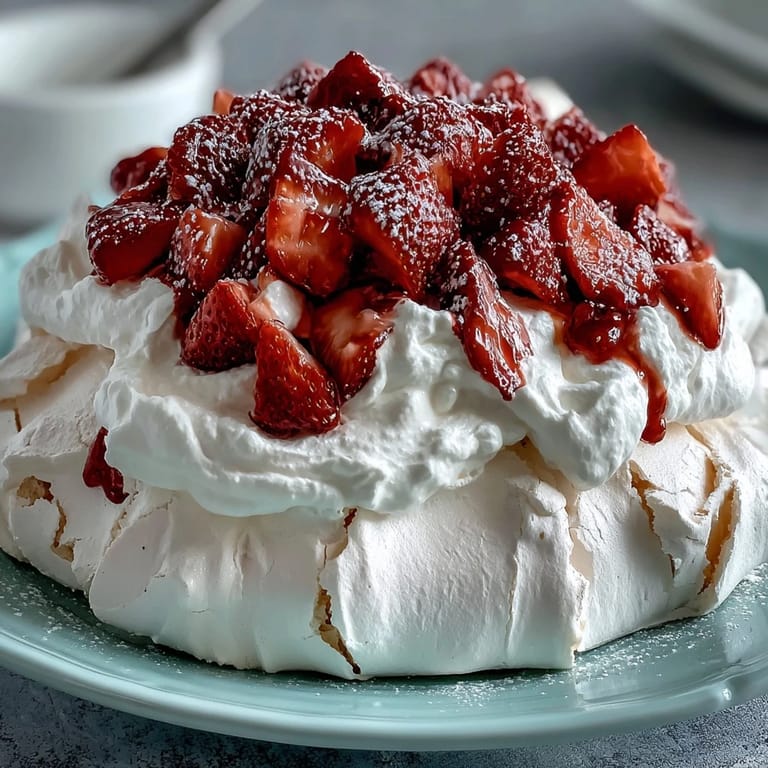
- Transfer the cooled meringue to your serving plate, spread the whipped cream over the center, and crown it with the strawberries. Do this just before serving so the meringue stays crisp and doesn't absorb too much moisture.
 Pin it
 Years later, I watched my mother make this pavlova for my daughter's fifth birthday party, and my girl insisted on helping whip the cream. That moment—her serious concentration, the way her eyes widened when soft peaks appeared—reminded me that these dishes aren't really about perfection. They're about the small rituals we repeat and the people we feed along the way.
Why This Dessert Feels Special
There's something almost magical about how meringue transforms from clear, slippery egg whites into something that's crispy, cloud-like, and structurally sound. It's one of those dishes that makes you feel like you've unlocked a secret when it turns out right, and it's humble enough to laugh about when it doesn't. The contrast of that shattering meringue against silky cream and juicy strawberries is what makes people close their eyes and smile on their first bite.
Timing and Prep Strategy
I've found that making the meringue earlier in the day takes pressure off dinner night—it's the most time-consuming component, and once it's cool and stored safely in a dry place, you're mostly just assembling. The cream can be whipped 30 minutes before serving if you keep it in the fridge, and the strawberries should be sliced just before you build the pavlova. This breaks the work into manageable pieces instead of a last-minute rush.
Creative Variations Worth Trying
While strawberries are classic for good reason, I've experimented with raspberries, blueberries, and even passion fruit curd swirled into the cream. In winter, I've used pomegranate seeds and a touch of rose water in the cream for something unexpected. The meringue itself is forgiving enough to handle these twists—it's the canvas, and the toppings are what make it your own.
- Try a layer of lemon curd under the whipped cream for brightness and tang.
- Swirl a tablespoon of honey into the cream before whipping for subtle depth.
- Dust the finished pavlova with a tiny pinch of edible gold or a sprinkle of crushed pistachios for texture and elegance.
 Pin it
 This pavlova reminds me that some of the most impressive desserts come from understanding a few simple techniques rather than following complicated formulas. Make it once and you'll know exactly how to tweak it next time.
Recipe Questions & Answers
- → How do I achieve a crisp yet chewy meringue?
Beat egg whites until stiff peaks form and gently fold in cornstarch and vinegar to stabilize. Bake at a low temperature slowly and let cool inside the oven to maintain texture.
- → Can I prepare the meringue in advance?
Yes, you can bake and cool the meringue ahead of time, but store it in an airtight container to keep it crisp. Assemble just before serving to avoid softening.
- → What’s the best way to macerate strawberries?
Toss sliced strawberries with a bit of granulated sugar and let sit for about 10 minutes to draw out their juices and enhance natural sweetness.
- → How do I whip cream to perfect soft peaks?
Use chilled heavy cream and beaters, whip on medium speed until soft peaks form—when the cream holds shape but still moves gently.
- → Can I substitute other berries for the topping?
Absolutely. A mix of berries like blueberries or raspberries can complement the cream and meringue while adding different flavors and colors.