 Pin it
 The scent of juniper and sloe gin simmering together stopped me mid-stir the first time I made this. I'd been given a bottle of homemade sloe gin by a neighbor and wasn't quite sure what to do with it beyond sipping it by the fire. Then I found a beautiful cut of venison at the butcher, dark and lean, and something clicked. The stew that emerged from my Dutch oven that night was deeper and more fragrant than anything I'd made before, the gin adding a fruity sharpness that cut through the richness of the meat in a way I hadn't expected.
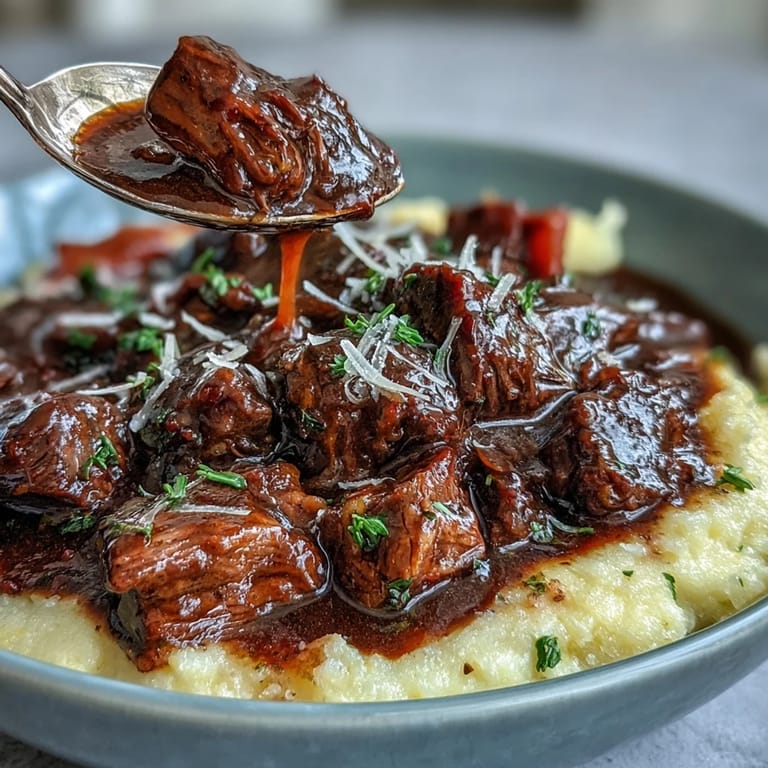
I served this to friends on a particularly cold January evening, the kind where frost clings to the windows well past noon. Everyone arrived chilled and skeptical about venison, but by the time I ladled the stew over golden polenta, the kitchen smelled like a countryside inn. One friend, who claimed she didn't like game meat, went back for seconds without a word. That silence, punctuated only by the scrape of spoons, told me everything I needed to know.
Ingredients
- Venison shoulder or stewing venison: This cut becomes incredibly tender with slow braising and has a clean, rich flavor that isn't as strong as you might fear.
- Olive oil: Use a good quality oil for browning, it helps build the deep caramelized base that makes the stew so flavorful.
- Onion, carrots, and celery: The classic mirepoix adds sweetness and body, softening into the sauce as everything simmers together.
- Garlic and tomato paste: These deepen the savory backbone, the paste especially adds umami and a slight tang.
- Sloe gin: The star here, bringing berry sweetness and a hint of almond from the sloe stones, it deglazes beautifully and perfumes the whole dish.
- Beef or game stock: A rich stock is essential, it should taste good on its own because it becomes the soul of the stew.
- Redcurrant jelly: A spoonful balances the gin and adds a glossy, fruity finish without making things too sweet.
- Bay leaves, thyme, and juniper berries: These aromatics make the kitchen smell like a forest in winter, juniper especially pairs naturally with game.
- Polenta: I prefer quick-cooking for ease, but traditional polenta has a slightly better texture if you have the time to stir.
- Butter and Parmesan: They turn plain cornmeal into something luxurious, creamy and sharp all at once.
Tired of Takeout? 🥡
Get 10 meals you can make faster than delivery arrives. Seriously.
One email. No spam. Unsubscribe anytime.
Instructions
- Brown the venison:
- Heat the olive oil until it shimmers, then add the venison in batches so each piece gets a dark, caramelized crust. Don't rush this step, the color you build now becomes flavor later.
- Soften the vegetables:
- Add the onion, carrots, and celery to the same pan, scraping up any browned bits as they cook until everything softens and smells sweet. Stir in the garlic and tomato paste, letting them cook for a minute until fragrant and slightly darkened.
- Deglaze with sloe gin:
- Return the venison to the pot and pour in the sloe gin, letting it bubble and reduce by about half. The smell at this stage is intoxicating, fruity and sharp and warm all at once.
- Add stock and aromatics:
- Pour in the stock, then stir in the redcurrant jelly, bay leaves, thyme, and crushed juniper berries. Season generously with salt and pepper, then bring everything to a gentle simmer.
- Simmer low and slow:
- Cover the pot and turn the heat to low, letting the stew cook gently for about two hours. Stir occasionally and check that it's barely bubbling, the meat should become so tender it almost falls apart when prodded with a fork.
- Make the polenta:
- While the stew finishes, heat the milk and water in a saucepan until steaming but not boiling. Whisk in the polenta in a steady stream, stirring constantly to prevent lumps, and cook until thick and creamy.
- Finish the polenta:
- Stir in the butter and Parmesan, tasting and adjusting the salt until it's rich and savory. Keep it warm over very low heat, adding a splash of milk if it thickens too much before serving.
- Serve:
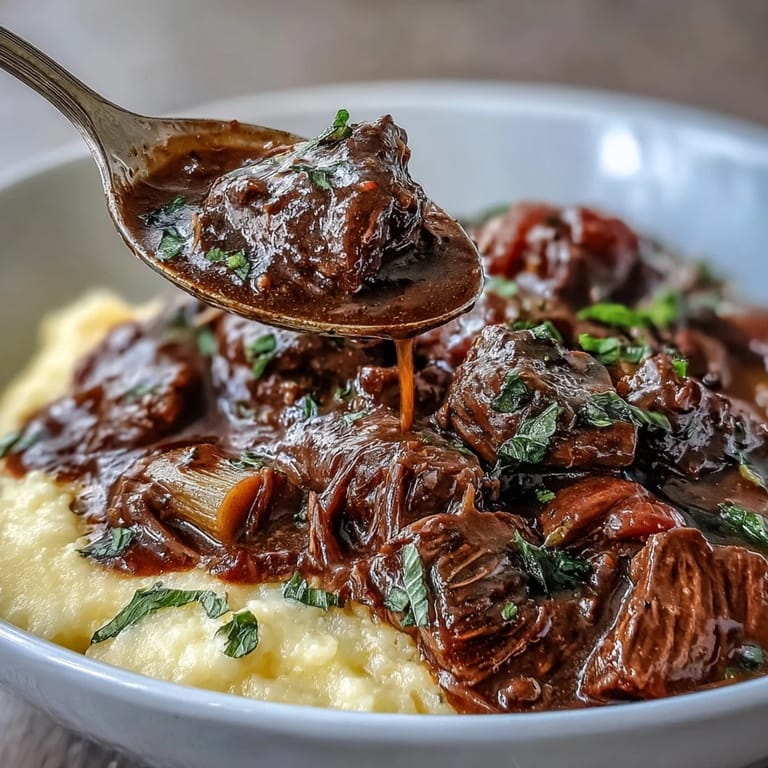
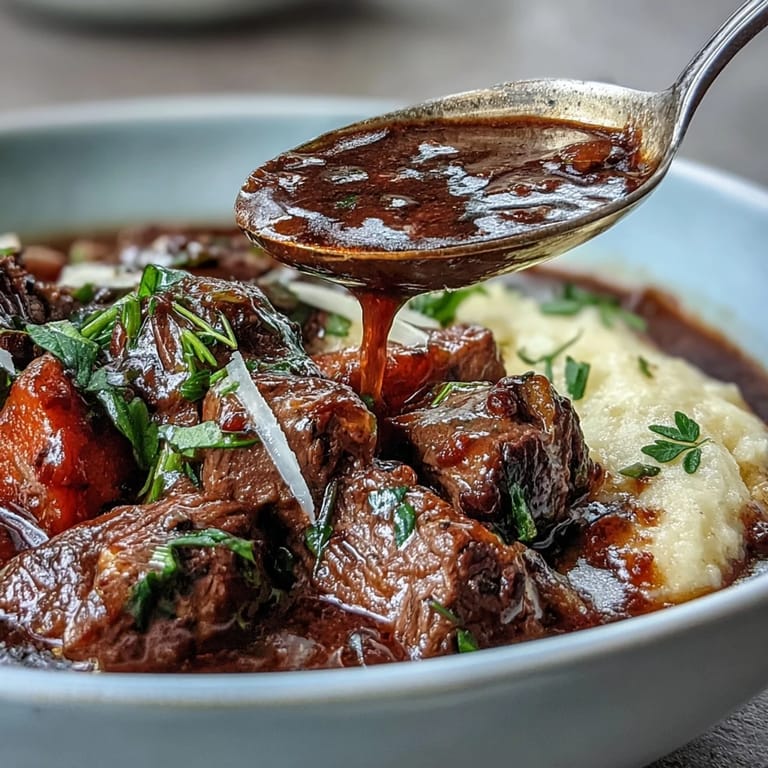
- Fish out the bay leaves and thyme sprigs from the stew, then ladle it generously over bowls of soft polenta. The contrast between the tender meat and creamy base is exactly what a cold evening needs.
 Pin it
 This stew has become my answer to winter dinner parties and quiet Sunday evenings alike. There's something about the way the sloe gin lingers in the background, fruity but not sweet, that makes people pause and try to guess the secret ingredient. It's the kind of dish that turns a simple meal into an occasion, even when it's just you and a bowl by the fire.
Choosing Your Venison
Venison shoulder is ideal because it has enough marbling to stay moist during long cooking without turning dry or stringy. If you can only find leg or haunch, that works too, just make sure it's cut for stewing and not quick roasting. I've learned to ask the butcher directly, they often have offcuts or trim that's perfect for braises and costs less than premium cuts. The meat should be deep red, almost burgundy, and smell clean and faintly sweet, never sour or overly strong.
Getting the Most from Sloe Gin
Sloe gin varies wildly depending on whether it's homemade or commercial, some are syrupy and sweet while others are dry and botanical. I prefer a drier style for cooking because it adds complexity without turning the stew into dessert. If yours is very sweet, cut back slightly on the redcurrant jelly and add a splash of red wine for balance. Don't worry about using an expensive bottle, the cooking mellows it, but do use something you'd actually drink because harsh alcohol will taste harsh in the pot.
Making the Polenta Foolproof
The key to lump free polenta is whisking constantly as you add it to the liquid and keeping the heat low once it thickens. I learned this the hard way after a batch turned into a grainy, clumpy mess that no amount of stirring could save. If you do get lumps, a quick blitz with an immersion blender can save it, though the texture won't be quite as silky. For extra richness, replace some of the water with more milk, or stir in a spoonful of mascarpone at the end.
- Use a heavy bottomed pan to prevent scorching on the bottom.
- If making ahead, spread the polenta in a dish, let it set, then reheat slices in butter for a different texture.
- Leftover polenta firms up beautifully and can be grilled or fried the next day.
 Pin it
 This is the kind of meal that makes you glad winter exists, rich and warming and just a little bit fancy without any fuss. Serve it to people you want to impress, or make it just for yourself on a night when you need something that feels like a hug in a bowl.
Recipe Questions & Answers
- → Can I use a different cut of venison?
Yes, any venison stewing cut works well, including leg or haunch. Choose cuts with some marbling for the most tender results after slow cooking.
- → What can I substitute for sloe gin?
Port, red wine, or berry liqueur make excellent substitutes. Each adds depth and complexity to the sauce while complementing the rich venison flavor.
- → Can I make this ahead of time?
Absolutely. The stew actually improves when made a day ahead, allowing flavors to develop. Reheat gently and prepare fresh polenta just before serving.
- → How do I prevent the polenta from becoming lumpy?
Add polenta gradually while whisking constantly, and maintain a gentle simmer. Continuous stirring during cooking ensures a smooth, creamy consistency.
- → Can I cook this in a slow cooker?
Yes, brown the meat and vegetables first, then transfer everything to a slow cooker. Cook on low for 6-8 hours until the venison is tender.
- → Is this suitable for freezing?
The stew freezes excellently for up to 3 months. Freeze in portions and prepare fresh polenta when ready to serve for best results.