 Pin it
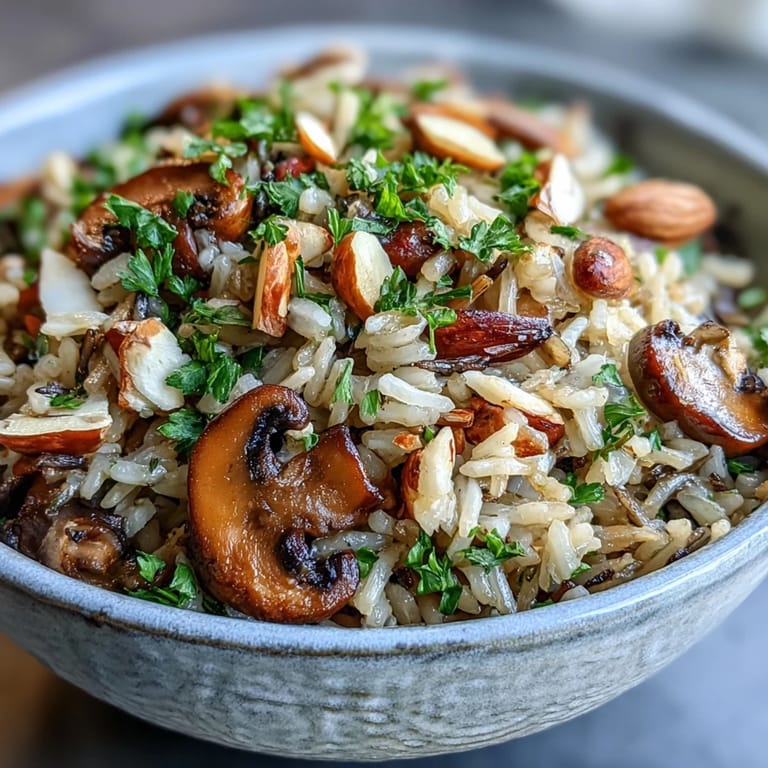
 Wild rice has this stubborn, wonderful personality that reminds me of a friend who takes time to open up but becomes irreplaceable once you know them. I discovered this pilaf on a crisp autumn afternoon when I had mushrooms that needed rescuing from the back of my fridge and a box of wild rice sitting unopened in the pantry. The combination seemed obvious in hindsight, but that first time I folded the nutty, tender grains into the caramelized mushrooms, something clicked—the earthiness, the slight chew, the way each element held its own while creating something greater together. It's become my go-to when I want something that feels substantial without demanding hours in the kitchen.
I made this for my sister's potluck during a particularly brutal January, and she called me the next day asking for the recipe because apparently it was the only thing her picky teenager ate voluntarily. Watching it disappear from the serving dish faster than I'd anticipated taught me that humble side dishes sometimes steal the spotlight, and that's perfectly fine.
Ingredients
- Wild rice, 1 cup rinsed: Rinsing removes surface starch and prevents clumpiness—a step that takes thirty seconds but makes a real difference in texture.
- Vegetable broth, 2 cups low-sodium: Low-sodium gives you control over the final saltiness, which matters more than you'd think with such a simple dish.
- Water, 1/2 cup: This dilutes the broth slightly so the rice doesn't taste too concentrated or salty.
- Olive oil, 2 tablespoons: This is your cooking medium for coaxing out the mushroom flavors—don't skimp on quality here.
- Yellow onion, 1 medium finely chopped: Onion is the foundation, providing sweetness that balances the earthiness of everything else.
- Garlic, 2 cloves minced: Garlic goes in after the onion softens, preventing it from burning and turning bitter.
- Cremini or button mushrooms, 8 oz sliced: Cremini have slightly more depth than buttons, but either works beautifully when you give them time to release their moisture.
- Celery stalk, 1 finely chopped: Celery adds a subtle aromatic undertone that ties the whole thing together.
- Carrot, 1 medium diced: Carrots bring natural sweetness and a bit of color to the finished dish.
- Fresh thyme, 1 teaspoon or 1/2 teaspoon dried: Thyme is classic with mushrooms—use fresh if you have it, but dried works just as well.
- Bay leaf, 1: This becomes bitter if left in too long, so remember to fish it out after cooking.
- Salt and freshly ground black pepper, to taste: These are your final adjusters—always taste before serving and trust your palate.
- Fresh parsley, 2 tablespoons chopped: Parsley brightens everything at the end and adds a visual freshness.
- Toasted slivered almonds, 1/4 cup optional: Almonds add crunch and a subtle nuttiness that echoes the wild rice itself.
Tired of Takeout? 🥡
Get 10 meals you can make faster than delivery arrives. Seriously.
One email. No spam. Unsubscribe anytime.
Instructions
- Start the wild rice:
- Bring the rinsed wild rice, vegetable broth, and water to a boil in a medium saucepan, then reduce heat, cover, and let it simmer for 40–45 minutes until tender and most liquid is absorbed. You'll know it's done when the grains have split slightly at the ends and taste creamy rather than hard.
- Build your flavor base:
- While the rice cooks, heat olive oil in a large skillet over medium heat and add the chopped onion, celery, and carrot, letting them soften for about 5–6 minutes. You want them tender but not caramelized at this stage—this is just the beginning.
- Coax out the mushroom magic:
- Add the minced garlic and sliced mushrooms to the skillet and cook for 6–8 minutes, stirring occasionally, until the mushrooms turn golden and release all their moisture. This step is where patience pays off—don't rush it, because that evaporated liquid is where all the flavor lives.
- Season and finish cooking:
- Stir in the thyme, bay leaf, salt, and pepper, cooking for one more minute, then carefully remove the bay leaf before it disappears into the pilaf. The aromatics will fill your kitchen at this point.
- Bring it all together:
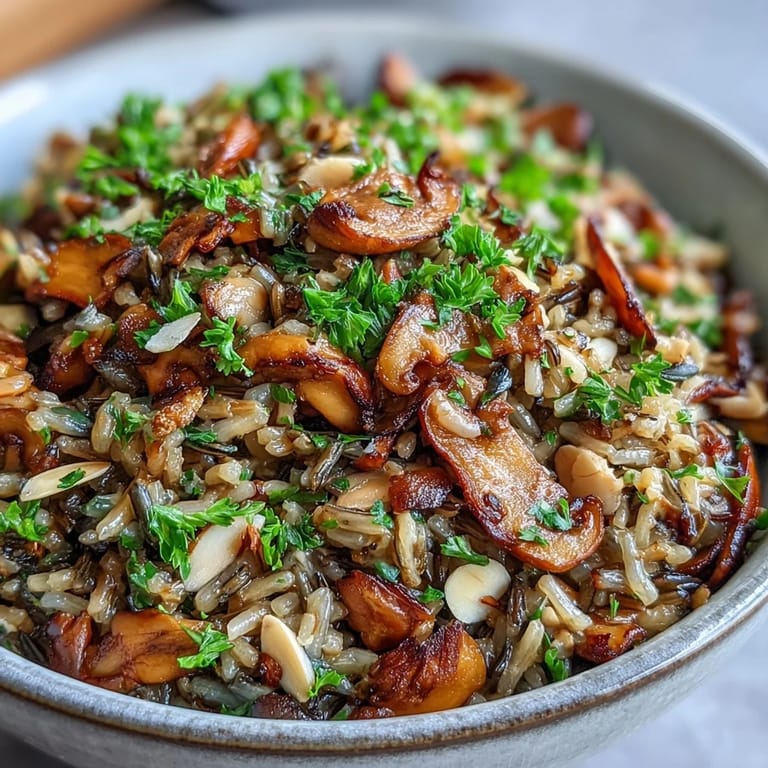
- Gently fold the cooked wild rice into the mushroom mixture, being careful not to break the grains, then taste and adjust seasoning as needed. Sometimes a pinch more salt or a crack of pepper is all it needs.
- Plate and garnish:
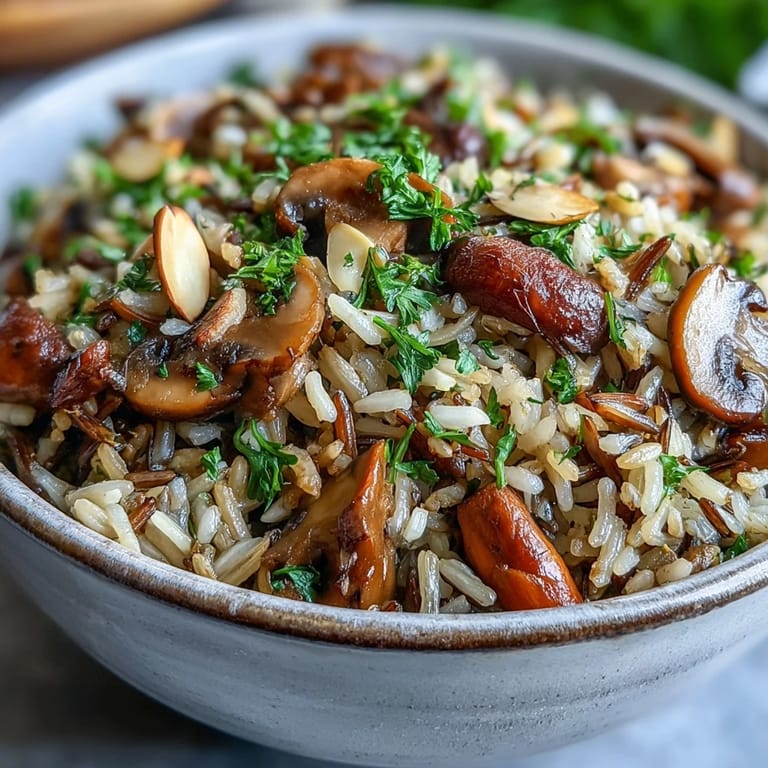
- Transfer to a serving dish, scatter the fresh parsley on top, and add the toasted almonds if you're using them for that extra texture and elegance. Serve while it's warm.
 Pin it
 There's something grounding about serving this pilaf to people who arrive at your table hungry and tired, then watching their expressions shift as they taste it. It's proof that the simplest ingredients, given respect and patience, can become something memorable.
Timing and Make-Ahead Options
You can prep the vegetables hours in advance and store them in the refrigerator, which means the actual cooking time is really just the simmering of the rice. The mushroom mixture can be made a few hours ahead and reheated gently before folding in the rice, though the pilaf tastes best when assembled close to serving time.
Variations and Substitutions
If you want to experiment, a splash of dry white wine when sautéing the mushrooms adds subtle complexity, or you can replace half the wild rice with brown rice for a softer texture and milder flavor. Cremini mushrooms are my preference, but oyster mushrooms or a mix would be equally delicious and give you different flavor notes.
Serving Suggestions and Storage
This pilaf works beautifully alongside roasted poultry, grilled fish, or roasted vegetables, but it's equally satisfying eaten on its own as a vegetarian main course. Leftovers keep in an airtight container in the refrigerator for up to four days, and you can reheat them gently in a skillet with a splash of water or broth to restore moisture.
- Leftovers actually taste even better the next day when the flavors have had time to meld together.
- If you're making this for a crowd, you can easily double the recipe in a larger skillet and saucepan.
- Store any toasted almonds separately if you're planning to save leftovers, as they lose their crunch when reheated.
 Pin it
 This pilaf has become one of those recipes I make without thinking, the kind that lives in your hands more than on paper. It's comforting without being heavy, elegant without pretense, and that's exactly why it keeps showing up on my table.
Recipe Questions & Answers
- → What makes wild rice different from regular rice?
Wild rice is actually a semi-aquatic grass rather than true rice. It has a chewy texture, nutty flavor, and takes longer to cook than white or brown rice. The grains retain their shape well, making them ideal for pilafs and salads.
- → Can I prepare this dish ahead of time?
Yes, this pilaf reheats beautifully. Prepare the entire dish up to a day in advance, store it in an airtight container in the refrigerator, and warm it gently with a splash of water or broth before serving.
- → What mushrooms work best in this pilaf?
Cremini mushrooms provide excellent flavor and meaty texture, but button mushrooms work well too. For more variety, try combining cremini with shiitake or adding dried porcini mushrooms rehydrated in the broth.
- → How do I know when wild rice is fully cooked?
Wild rice is done when the grains are tender, some have split open revealing the white interior, and most liquid has been absorbed. This typically takes 40-45 minutes. Taste test a few grains to ensure they're chewy but not tough.
- → Can I freeze wild rice pilaf?
This pilaf freezes well for up to 3 months. Cool completely, transfer to freezer-safe containers, and thaw overnight in the refrigerator before reheating. The texture may soften slightly, but flavor remains excellent.