 Pin it
 My grandmother kept a buttermilk pie in her kitchen at almost all times, tucked behind the green Tupperware in the refrigerator, and I never understood why until I tasted it—that strange, sweet-tangy filling that somehow felt both nostalgic and impossible to describe. Years later, when I finally asked for her recipe, she laughed and said it was the easiest pie she ever made, which felt like a trick until I realized she meant it. The magic wasn't in complexity; it was in how buttermilk transforms into something creamy and custard-like in the oven, creating a dessert that feels fancy but bakes itself into perfection with barely any fuss.
I made this pie for the first time on a Tuesday afternoon when my mom was visiting, and she walked into the kitchen just as the whole house began smelling like toasted butter and vanilla. She tasted it warm, straight from the rack, and said nothing for a moment—which was everything. That pie became the excuse for her to stay an extra day, and we spent the evening eating slices on the porch, talking about nothing in particular, which somehow felt like everything.
Ingredients
- Unbaked 9-inch pie crust: Whether you roll your own or grab one from the freezer aisle, this is your foundation—don't skip letting it come to room temperature slightly so it settles into the dish without cracking.
- Granulated sugar: The sweetness anchors the filling, and whisking it with flour first helps distribute both evenly so you won't bite into a grainy pocket.
- All-purpose flour: Just a few tablespoons thickens the custard and prevents the filling from staying too loose while baking.
- Unsalted butter, melted and cooled: Melting it first means it incorporates smoothly; cooling it prevents scrambling the eggs when they meet the warm butter.
- Large eggs: These are the binding agent that makes the filling custardy—bring them to room temperature if you have time, as they blend more evenly.
- Buttermilk: The real star here; that tangy dairy is what transforms a basic custard into something memorable and slightly mysterious.
- Lemon juice: A tablespoon brightens the filling just enough so it doesn't feel one-note sweet, cutting through the richness with a gentle sour note.
- Vanilla extract: The quiet backbone that ties all the flavors together without announcing itself.
- Ground nutmeg: A quarter teaspoon is subtle—enough to whisper warmth without overpowering the pie.
- Salt: Don't skip it; it's the secret that makes every other flavor clearer and more distinct.
Tired of Takeout? 🥡
Get 10 meals you can make faster than delivery arrives. Seriously.
One email. No spam. Unsubscribe anytime.
Instructions
- Set your oven and crust:
- Preheat your oven to 350°F and settle that pie crust into your dish, crimping the edges however feels right to you. This gives your oven time to reach temperature while you move on to the filling.
- Build the sweet base:
- Whisk together the sugar and flour in a large bowl—this simple step prevents lumps and ensures your filling bakes evenly. The flour won't taste grainy; it'll just give the custard structure.
- Incorporate the butter:
- Pour in your cooled melted butter and stir until you have something that looks like wet sand. Don't overthink it; just mix until it's combined.
- Add eggs one at a time:
- Crack each egg into the mixture and whisk after each addition, watching the filling become smoother and richer with each one. This prevents any raw egg taste and keeps the texture consistent.
- Finish the filling:
- Pour in the buttermilk, lemon juice, vanilla, nutmeg, and salt, stirring until everything is fully incorporated and there are no streaks of unmixed flour hiding at the bottom. Taste isn't necessary—just trust the recipe.
- Pour and bake:
- Carefully pour that filling into your waiting crust and slide the whole thing into the oven. Bake for 40 to 50 minutes, until the center is set but still has the gentlest jiggle when you shake the rack.
- Cool with patience:
- Let the pie cool completely on a wire rack before slicing—this is when the filling finishes setting and the flavors settle. Serve it at room temperature or cold, depending on your mood.
 Pin it
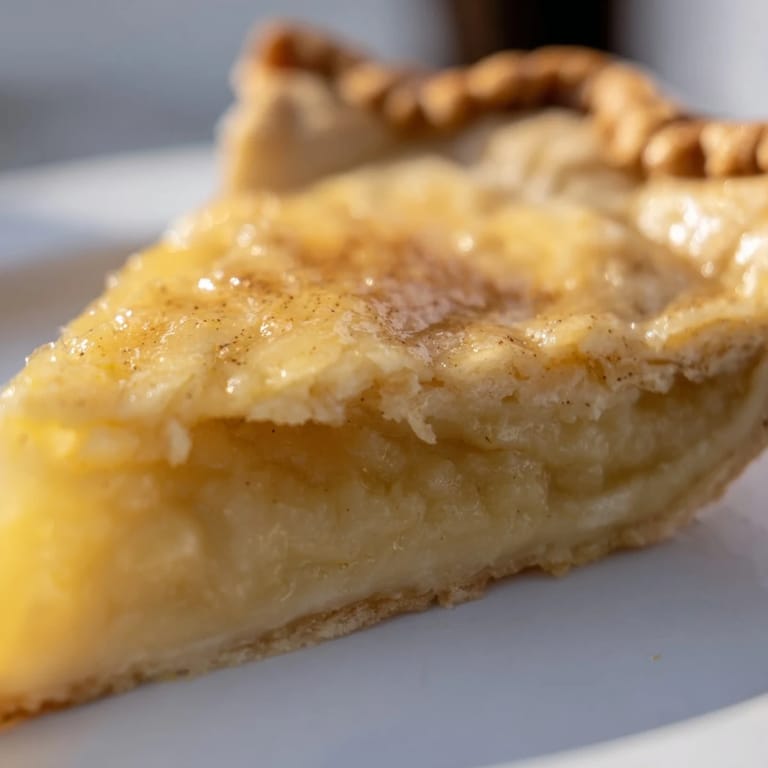
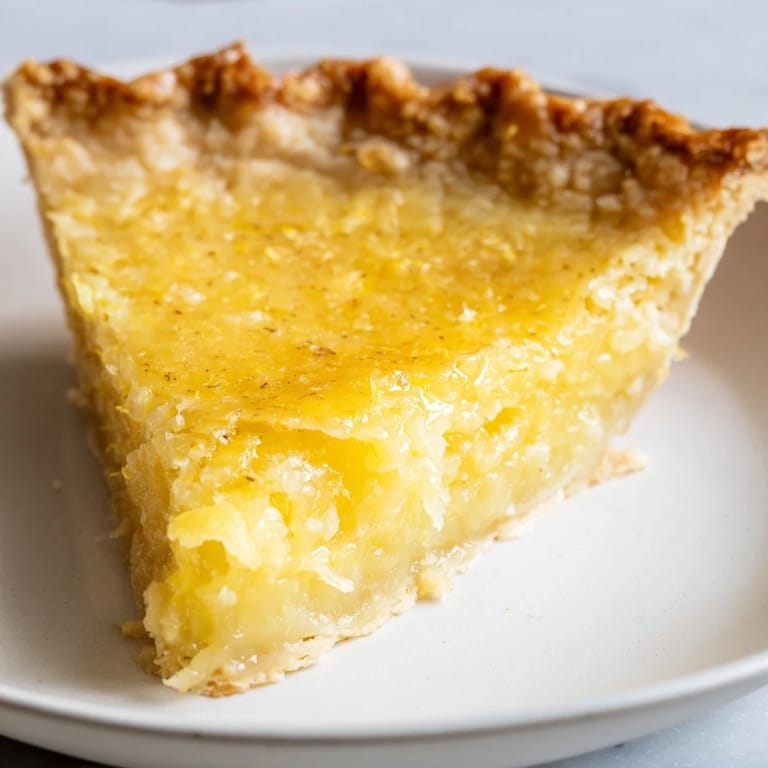
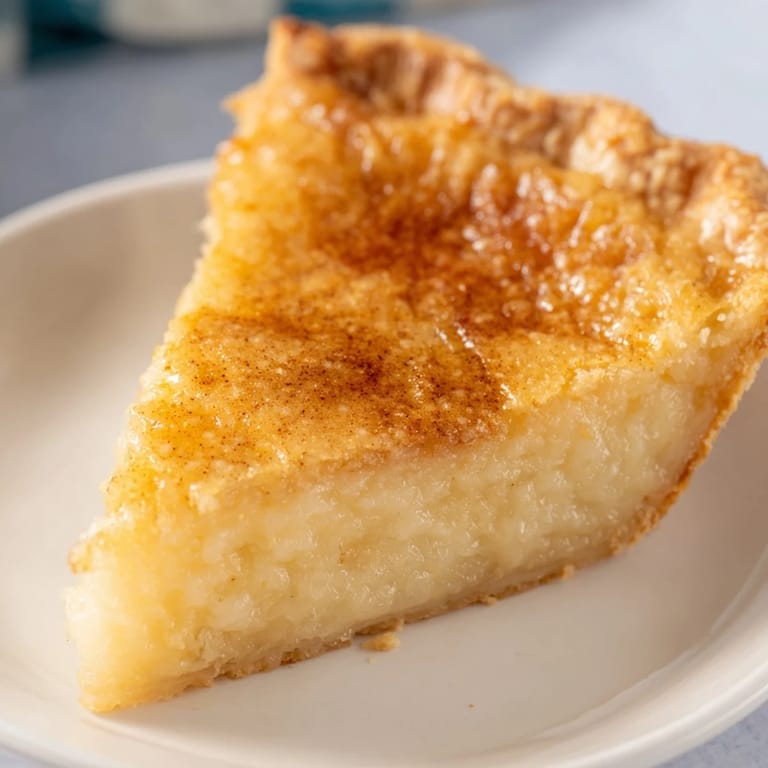
 The first time I pulled this pie from the oven, I was shocked at how simple it looked—almost plain, really—until I cut into it and found that silky, slightly wobbly center that somehow held together perfectly as it cooled. That moment of not knowing if I'd done it right, and then discovering I had, was when this pie stopped being just a recipe and became something I wanted to make again and again.
The Tangy-Sweet Magic
Buttermilk is one of those ingredients that sounds like it would make something sour or unpleasant, but it does the opposite here. The acidity plays against the sugar and butter, creating a flavor that's both comforting and a little unexpected, like finding out someone you've known forever is much more interesting than you thought. The vanilla and nutmeg add just enough warmth to make it feel like a proper dessert instead of a custard experiment, but they stay in the background so the buttermilk can have its moment.
Why This Pie Never Gets Old
Part of the appeal is how forgiving this pie is—it doesn't require blind-baking the crust or waiting for special ingredients or timing anything to the second. The filling basically bakes itself, creating its own texture and structure without much fussing, which means you can focus on things that matter, like setting the table or deciding whether you want ice cream on the side. It's the kind of dessert that makes you look like you have your life together even on the days when you absolutely don't.
Serving and Storage
This pie is genuinely good at almost any temperature, though I have a soft spot for it slightly warm with a dollop of whipped cream that melts into the filling. Leftovers keep in the refrigerator for up to three days, and it actually tastes better the next day once everything has fully settled. A slice cold, straight from the fridge, is its own kind of afternoon pick-me-up—the tanginess more pronounced, the sweetness more muted.
- If you want extra tang, add up to two tablespoons of additional lemon juice to the filling; it won't break anything.
- Sprinkle a bit of extra nutmeg on top before baking if you want the pie to smell like a spice cabinet.
- Serve with fresh berries or whipped cream if you're feeling fancy, or eat it plain if that's the kind of day you're having.
 Pin it
 This pie has a way of making people slow down and ask for seconds, which is really all a dessert should do. It's simple enough that you'll make it again, and good enough that people will ask you to.
Recipe Questions & Answers
- → What makes the filling creamy and tangy?
The combination of buttermilk and lemon juice gives the filling its signature tang, while eggs and melted butter create a creamy custard texture.
- → How can I tell when it’s fully baked?
The pie is done when the center is set and the top turns a light golden color. A slight jiggle in the middle is normal but it should not be liquid.
- → Can I add extra flavor to the custard?
Yes, adding extra lemon juice enhances the tartness, and sprinkling nutmeg on top before baking boosts its warm aroma.
- → What is the best way to serve this dessert?
It’s delicious served chilled or at room temperature. Complement it with whipped cream or fresh berries for added freshness.
- → How should leftovers be stored?
Store leftovers covered in the refrigerator for up to three days to maintain freshness and texture.