 Pin it
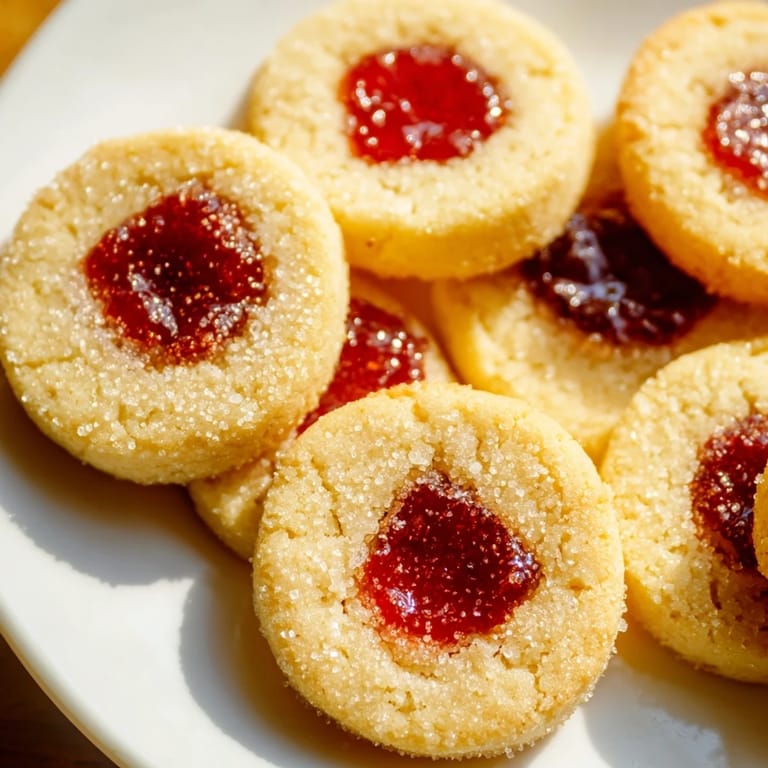
 My grandmother used to make these thumbprint cookies every December, and I'd watch her press her thumb into each ball of dough with the kind of practiced confidence that only comes from doing something a thousand times. Years later, when I finally learned the recipe, I realized those small indentations were her quiet signature on every batch, a tiny moment of intention before the jam went in. There's something almost meditative about making these now, and I think that's why they've become my go-to when I need to feel grounded in the kitchen.
I made these for a friend who'd just moved into her first apartment, and watching her face light up when she bit into one—that little burst of jam hitting unexpected sweetness—reminded me why simple food matters so much. She texted me weeks later asking for the recipe, which felt like the highest compliment.
Ingredients
- Unsalted butter, softened: This is your base, and softening it properly means the dough creams up fluffy instead of greasy; cold butter won't incorporate air, and warm butter turns everything into a mess.
- Granulated sugar: It dissolves into the butter, creating that tender crumb that makes these cookies so different from crispy ones.
- Egg yolks: Use just the yolks, not whole eggs—the whites would make the cookies cake-like, and we want delicate shortbread texture.
- Vanilla extract: A teaspoon is enough to add warmth without drowning out the butter flavor.
- All-purpose flour: Don't sift it unless it's clumpy; overmixing flour develops gluten and makes cookies tough.
- Fine sea salt: A tiny pinch balances the sweetness and deepens the butter flavor in ways you'll taste but not identify.
- Fruit jam or preserves: Raspberry, apricot, or strawberry all work beautifully; cheaper jam is fine since it all tastes good baked, so don't feel obligated to splurge.
Tired of Takeout? 🥡
Get 10 meals you can make faster than delivery arrives. Seriously.
One email. No spam. Unsubscribe anytime.
Instructions
- Cream the butter and sugar:
- Start with softened butter, add sugar, and beat them together for 2-3 minutes until the mixture looks pale and fluffy, almost like frosting. This step is where air gets incorporated, which makes the cookies tender.
- Add the egg yolks and vanilla:
- Beat them in one at a time so everything emulsifies smoothly instead of looking curdled. The mixture should be smooth and creamy before you add the flour.
- Mix in flour and salt:
- Add everything at once and mix just until a soft dough forms—you want to stop as soon as you don't see any white streaks of flour. Overmixing here is the enemy.
- Shape the dough:
- Roll the dough into 1-inch balls and place them 2 inches apart; they'll spread slightly, and you want room to work without them touching. Your hands might get a little sticky, which is normal.
- Create the indentations:
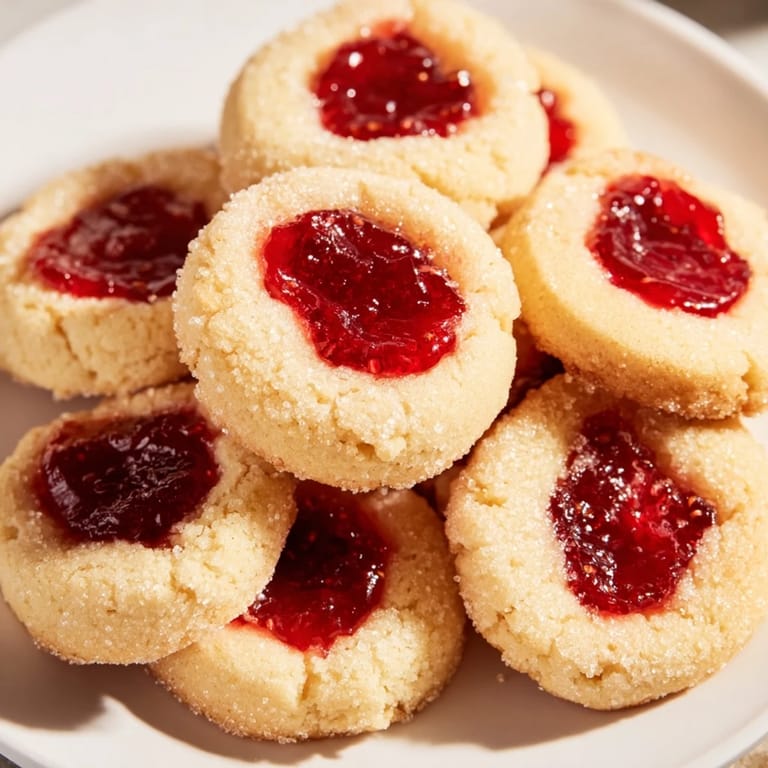
- Press your thumb gently into the center of each ball, or use the back of a small spoon dipped in water so it doesn't stick. The indentation should be deep enough to hold jam but not so deep you hit the bottom.
- Fill with jam:
- A small spoonful of jam in each indent is all you need—too much jam will bubble over and burn on the edges. Use a teaspoon or a small measuring spoon for consistency.
- Bake until golden:
- Watch for the edges to turn light golden, which happens around 12-15 minutes; the centers will still look pale, and that's exactly right. Underbaked cookies are soft and tender, overbaked ones turn hard.
- Cool properly:
- Leave them on the baking sheet for 5 minutes so they firm up enough to move, then transfer to a wire rack so the bottom doesn't steam and get soggy.
 Pin it
 The first time I made a batch for a bake sale, I underfilled the jam because I was nervous about it leaking, and the cookies tasted good but felt like they were missing something. The next batch, I was braver, and that little extra burst of sweetness made all the difference. Sometimes the best discoveries come from small acts of courage in the kitchen.
Flavor Variations That Work
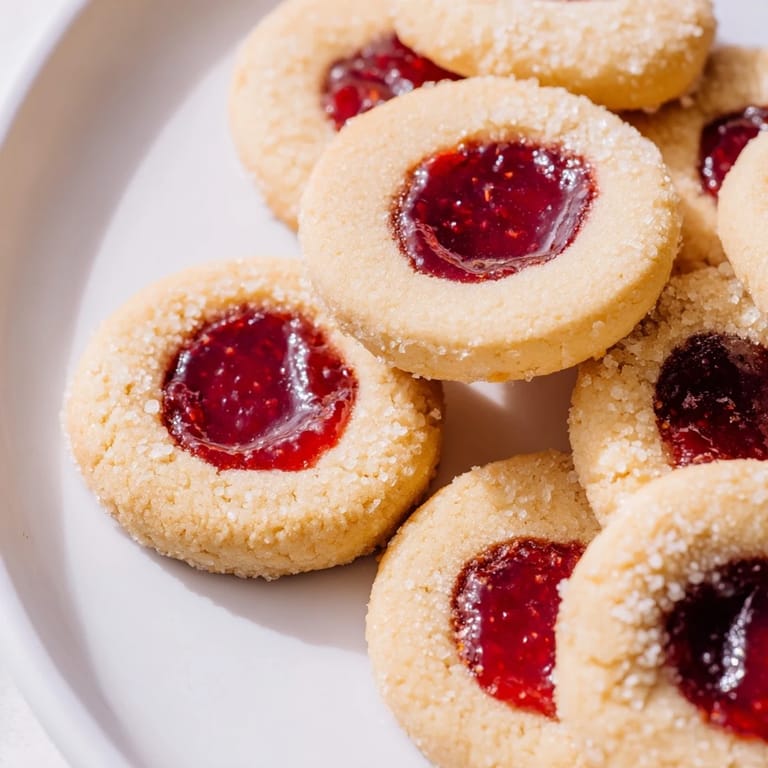
Raspberry is the classic, but don't stop there—apricot preserves have an almost floral quality that feels special, and strawberry works if you want something lighter and brighter. I've also played with less common options like blackberry or even a spoonful of dulce de leche when I wanted something richer, and both were unexpected wins.
Making Them Your Own
The dough itself is flexible enough to invite small changes without falling apart. A quarter teaspoon of almond extract mixed with the vanilla shifts the flavor just slightly, or you can roll the dough balls in finely chopped nuts before baking for texture and warmth.
Storage and Keeping
These cookies stay fresh in an airtight container for up to a week, though they rarely last that long in my house. They're equally good the day you make them and the day after, which makes them perfect for baking ahead or bringing to gatherings.
- Room temperature storage in an airtight container keeps them soft and tender for the full week.
- If they do go stale, a few seconds in the microwave brings back that just-baked softness.
- You can also freeze the baked cookies for a month, or freeze the unbaked dough balls and bake them whenever you get the craving.
 Pin it
 There's real magic in how these simple cookies bring people together—whether on a December afternoon, a new apartment housewarming, or just because you needed something warm and familiar. That's worth making them again and again.
Recipe Questions & Answers
- → What type of jam works best for thumbprint cookies?
Fruit jams like raspberry, apricot, or strawberry complement the buttery dough well, adding sweet-tart notes.
- → Can I add nuts to the cookies?
Yes, rolling the dough balls in finely chopped nuts before baking provides extra texture and flavor.
- → How should I store leftover thumbprints?
Keep them in an airtight container at room temperature for up to one week to maintain freshness.
- → What makes the shortbread tender?
The combination of softened butter, sugar, and precise mixing creates a delicate crumb texture in the dough.
- → Can these be prepared ahead of time?
Yes, you can shape the dough balls and refrigerate before baking to make the process more convenient.